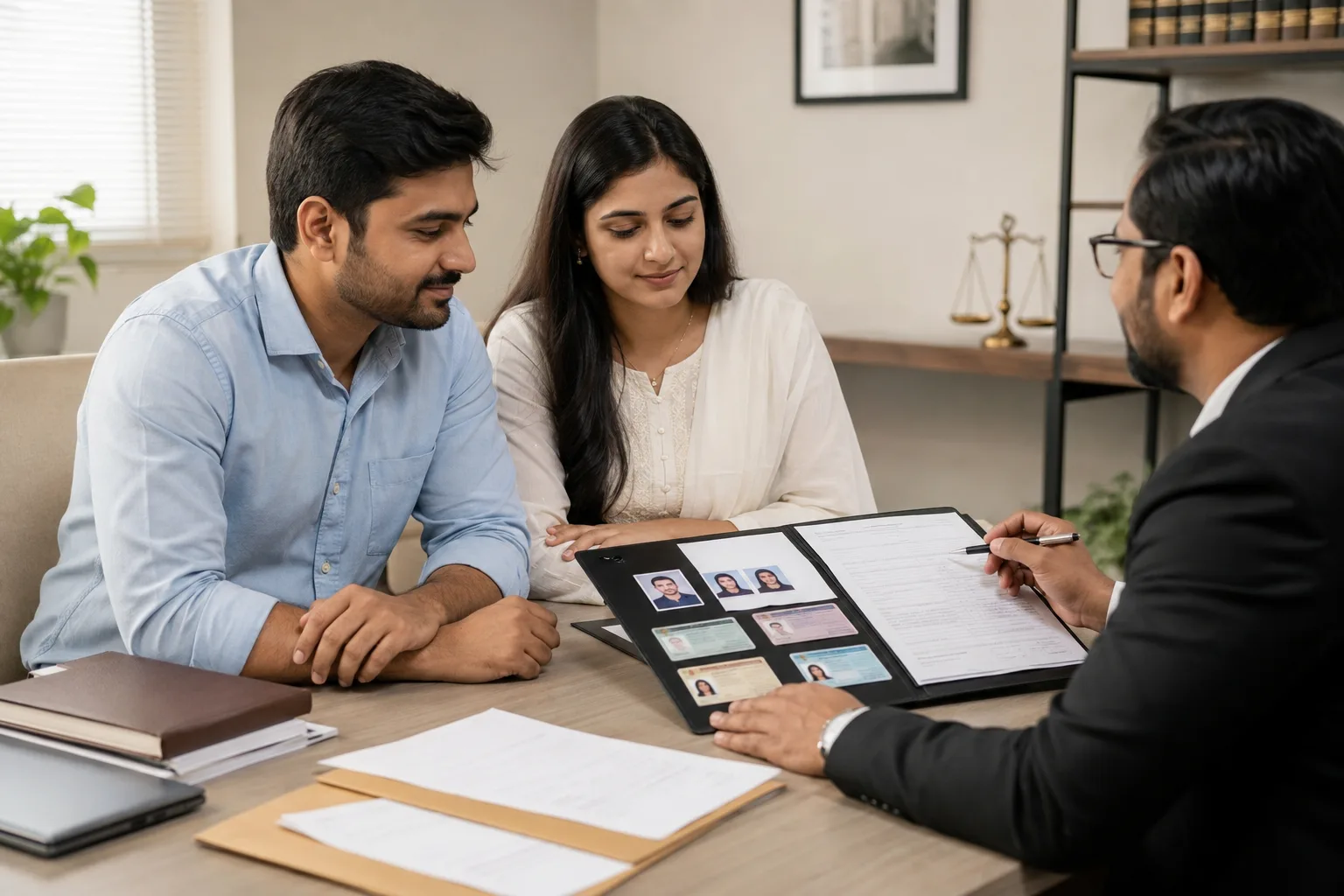
Essential Documents Required for Court Marriage Process
Court marriage gives couples a legal way to marry through a civil process. But before applying, it helps to understand the basic documents, witness needs, fees, and timeline. This guide gives a clear overview so couples can prepare with more confidence and avoid common filing mistakes.
What Documents Are Required for Court Marriage?
The main documents required for court marriage process in India are age proof, address proof, identity proof, passport-size photographs, affidavits, the notice of intended marriage, and documents for three witnesses.
The exact court marriage documents may vary by state, city, and Marriage Officer. But most offices ask both partners to submit proof of age, proof of residence, photo ID, recent photographs, and marital status affidavits.
If either partner was married earlier, a divorce decree or death certificate is required. Couples coming out of a mutual consent divorce should keep the final decree ready. Witnesses usually need ID proof, address proof, and passport-size photographs.
Court marriage usually happens under the Special Marriage Act, 1954. It allows two adults to marry through a civil process, without religious rituals. The court marriage process includes filing a notice, waiting for 30 days, handling objections if any, signing a declaration, and receiving the marriage certificate.
The biggest mistake couples make is simple. They carry documents, but not the correct versions. A mismatch in name, address, age, or marital status can delay the entire process.
Why Court Marriage Documents Matter So Much
Court marriage is not only a formality. It creates a valid legal record of marriage. This proof can also matter in cases where courts examine the presumption of marriage in live-in relationships.
The Marriage Officer checks every document before allowing solemnisation. This check protects both partners from fraud, underage marriage, bigamy, and identity disputes.
Under the Special Marriage Act, the basic conditions are clear. The male must usually be 21 years or above. The female must usually be 18 years or above. Both parties must be capable of giving valid consent. Neither party should have a living spouse.
The couple should also not fall within the prohibited degree of relationship. An exception may apply only if a valid custom permits it.
This is why the documents required for court marriage process are not optional. They prove eligibility, consent, residence, and identity.
Documents Required for Court Marriage Process in India
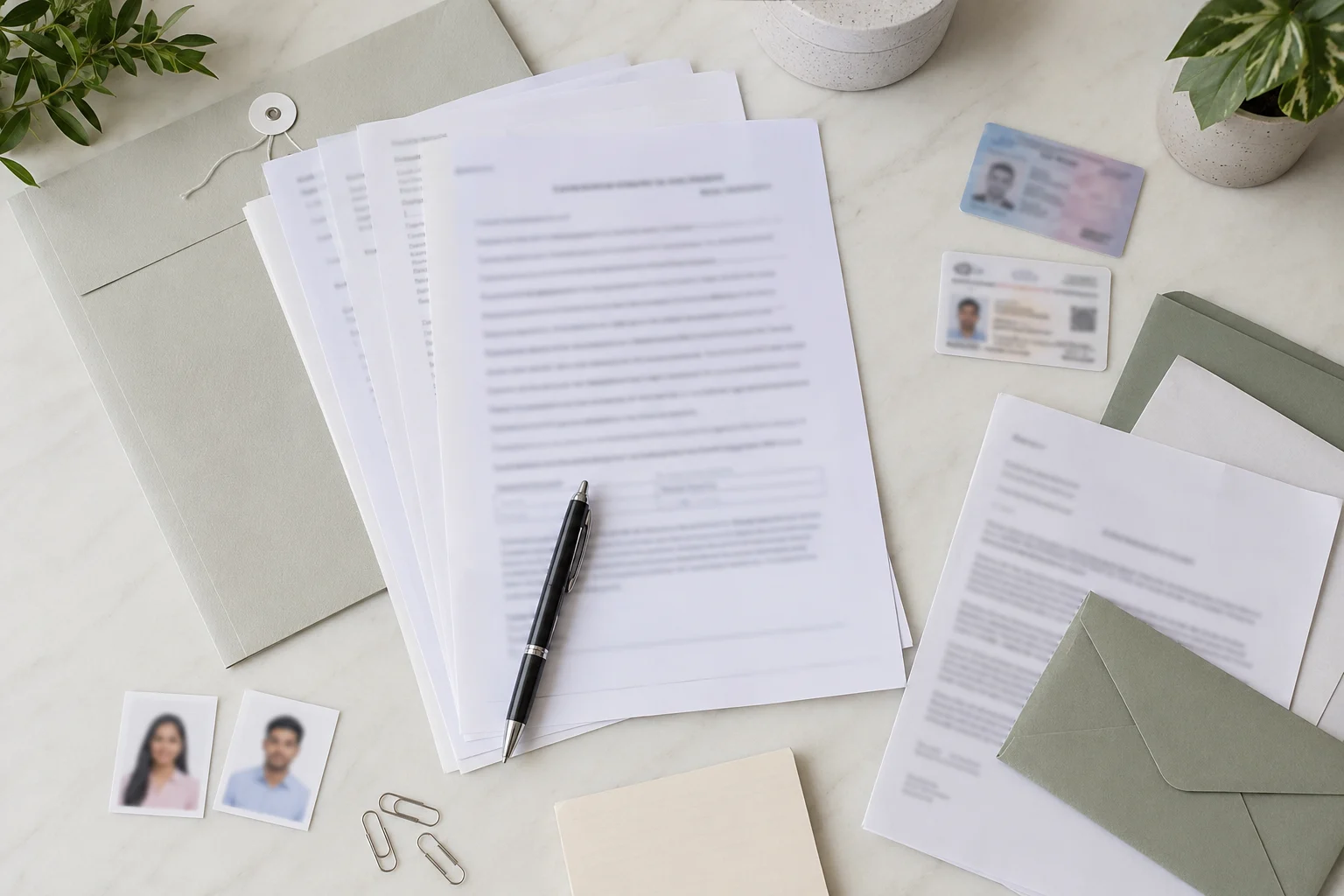
Here is the practical court marriage documents list most couples should prepare.
For both partners, keep these documents ready:
- Application form or notice of intended marriage
- Proof of age
- Proof of address
- Identity proof
- Passport-size photographs
- Separate affidavits from both partners
- Proof of marital status
- Divorce decree, if divorced
- Death certificate of spouse, if widowed
- Passport and visa, if a foreign national is involved
Commonly accepted age proof includes birth certificate, school leaving certificate, matriculation certificate, passport, or other official records.
Common address proof includes Aadhaar card, voter ID, passport, driving licence, rent agreement, utility bill, or ration card. The accepted proof may vary. For example, Karnataka’s registration guidance lists common address and identity proof options for special marriage services.
For identity proof, many offices accept Aadhaar, PAN card, passport, voter ID, or driving licence. Some states may prefer specific documents, so couples should check the official document guidance for special marriage services in their state.
The affidavit usually confirms date of birth, marital status, nationality, and relationship status. It may also confirm that the parties are not within a prohibited relationship.
This court marriage documents list should be checked with the local Marriage Officer before filing.
Register Marriage Documents vs Court Marriage Documents
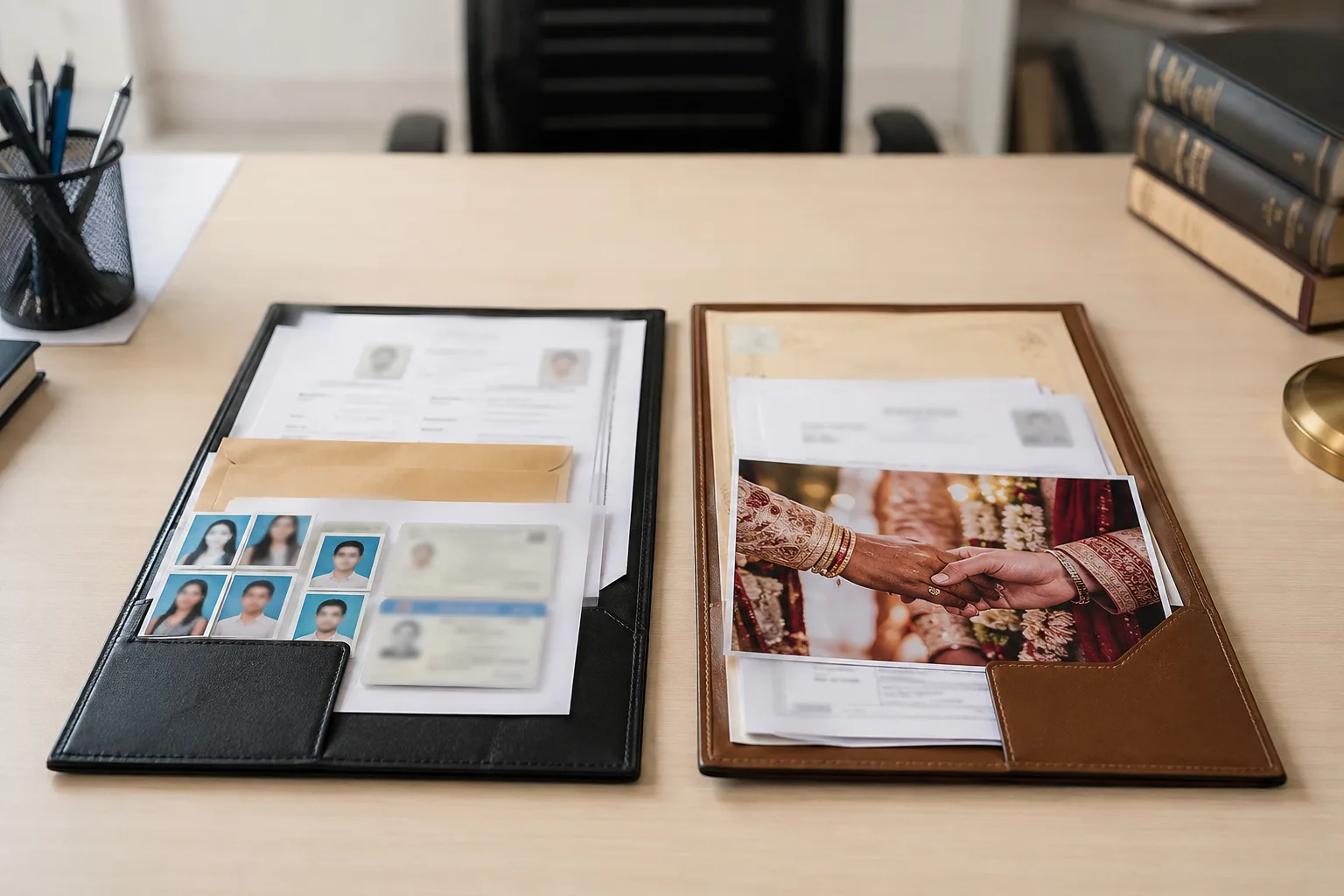
Many people use both terms in the same way. But they are not always the same.
Court marriage usually means solemnisation before a Marriage Officer under the Special Marriage Act. Registration may also mean recording an already performed marriage.
For example, a couple may first marry under religious customs. Later, they may register that marriage with the registrar. In that case, register marriage documents may include wedding photos, invitation card, priest certificate, and ceremony proof.
For a fresh court marriage, the focus changes. The office mainly checks eligibility, notice, affidavits, residence, and witnesses.
So, the register marriage documents depend on the type of marriage. A Special Marriage Act application needs a different file than a Hindu marriage registration file.
Documents Needed from Three Witnesses
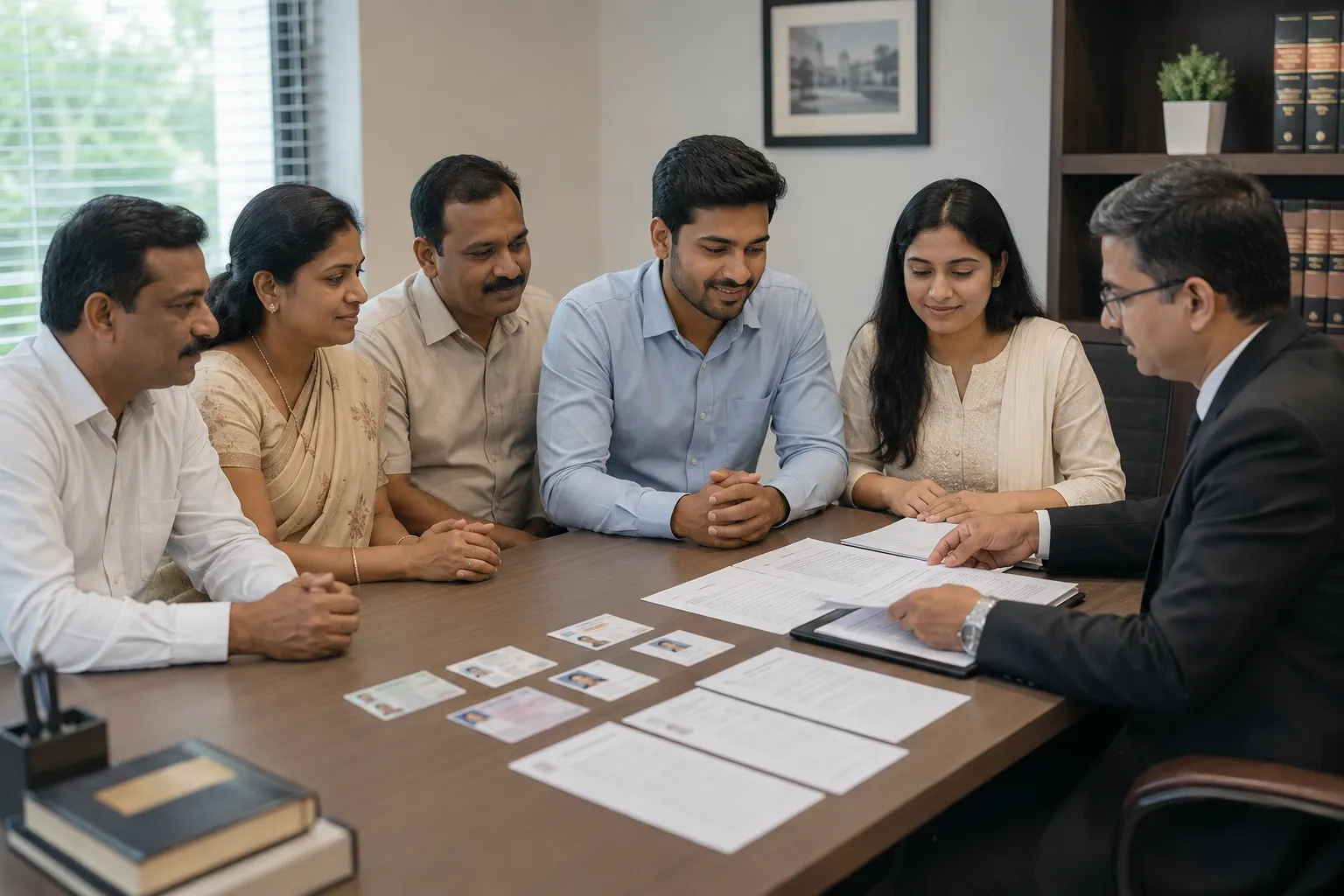
Three witnesses play a key role in the court marriage procedure in India.
The witnesses must appear before the Marriage Officer on the date of solemnisation. They sign the declaration and the marriage certificate record.
Usually, each witness needs:
- Identity proof
- Address proof
- Passport-size photograph
- PAN card, Aadhaar, passport, voter ID, or driving licence
A witness can usually be a friend, relative, colleague, or known person. The person should be an adult and should carry valid original documents.
Avoid last-minute witness changes. A missing witness can delay the appointment.
Court Marriage Process: Step-by-Step

The court marriage process is structured but manageable. Couples usually complete it in this order:
- File the notice of intended marriage with the Marriage Officer of the district.
- Make sure at least one partner has usually lived in that district for 30 days before giving notice.
- The Marriage Officer publishes the notice in the office for public review.
- Wait for the 30-day objection period to finish.
- If an objection comes, it must relate to legal conditions like age, existing marriage, consent, or prohibited relationship.
- If a dispute arises, experienced civil lawyers in Bangalore can help couples understand the next legal process.
- If no valid objection comes, the marriage can proceed after the notice period.
- Both partners and three witnesses appear before the Marriage Officer on the scheduled date.
- Both partners and witnesses sign the declaration.
- Each partner makes the required legal statement before the Marriage Officer and witnesses.
- The Marriage Officer solemnises the marriage and enters it in the Marriage Certificate Book.
- The couple receives the marriage certificate, which becomes strong legal proof of marriage.
Court Marriage Fees and Timeline

The official court marriage fees vary across states and offices. Karnataka’s Department of Stamps and Registration publishes a Special Marriage Registration Fees table. Other locations may have separate charges for applications, affidavits, copies, or services.
Always confirm the latest amount with the local Marriage Officer. You can also review state services listed on the National Government Services Portal. Do not rely only on private websites for fee figures.
| Item | Usual Position |
|---|---|
| Notice period | 30 days after publication |
| Witnesses | 3 witnesses required |
| Government fee | Varies by state and office |
| Extra costs | Affidavit, notary, copies, legal help |
| Total timeline | Usually 30 to 60 days |
In simple cases, the timeline often stays close to 30 to 45 days. If an objection arises, the process may take longer.
Special Cases That Need Extra Care
Some court marriage cases require additional documents depending on the couple’s circumstances. If either partner is divorced, a certified copy of the divorce decree is needed. If a previous spouse has passed away, the death certificate must be submitted.
When one partner is a foreign national, the Marriage Officer may ask for a passport, visa, proof of stay in India, and documents showing current marital status. Some offices may also request an embassy certificate or a no-objection certificate, although requirements can vary from place to place.
If there are differences in names across documents, it is advisable to carry proof of name change or a supporting affidavit. Likewise, if the current address does not match Aadhaar or passport records, additional residence proof such as a rent agreement, utility bill, or police verification may be required.
Couples facing family pressure or complex legal issues should consider taking legal advice. Privacy, safety, and proper documentation are important throughout the process. In such situations, experienced divorce lawyers in Bangalore can help couples understand their rights and handle related legal concerns.
Common Mistakes That Delay Court Marriage

Most delays come from avoidable errors. Address mismatch is one of the most common issues. The Marriage Officer may reject weak residence proof or ask for extra verification.
Incomplete affidavits can also slow down the file. The affidavit should match the prescribed format and clearly mention age, marital status, consent, and relationship details. Couples should also carry originals, not only photocopies.
Witness-related errors are another common reason for delay. Witnesses may forget address proof or valid ID proof. Many couples also confuse court marriage with instant registration, but the 30-day notice period usually applies under the Special Marriage Act.
The safest approach is to prepare a clean file before submitting notice. A complete file helps the office verify details faster and reduces avoidable objections.
Prashastha Legal Brand Take
Our legal take is simple. Court marriage is not difficult, but it is document-sensitive. Most couples focus only on the wedding date, but they should first focus on the document file.
A strong file answers four questions clearly. Who are the parties? Are they legally eligible? Where do they reside? Are they free to marry? Once those answers are clear, the court marriage procedure in India becomes smoother.
At Prashastha Legal, we also believe couples should not depend on generic checklists alone. Local practice matters because a document accepted in one office may lead to questions in another. That is why a pre-filing review can save weeks of delay.
Quick Checklist Before You Visit the Marriage Office
Before filing, check these points:
- Names match across all documents
- Dates of birth are clear
- Address proof shows local jurisdiction
- Marital status is correctly stated
- Affidavits follow the local format
- Witnesses are available on the final date
- Originals and photocopies are both ready
- Photos meet the required size and number
This checklist helps reduce objections from the office. It also makes the court marriage process less stressful.
FAQs on Court Marriage Documents and Process
These FAQs help answer the questions couples usually ask before starting the court marriage process. They also make it easier to understand documents, witnesses, fees, and timelines in a simple way.
1. What are the main documents required for court marriage in India?
The main documents are age proof, address proof, ID proof, photographs, affidavits, marriage notice, and witness documents.
2. How many witnesses are needed for court marriage?
Three witnesses are needed for court marriage under the Special Marriage Act.
3. Is Aadhaar enough for court marriage documents?
Aadhaar may work as ID or address proof, but you may still need age proof, affidavits, photos, and witness documents.
4. What is the court marriage fee in India?
Court marriage fees depend on the state and local office. Confirm the current fee with the Marriage Officer.
5. Can court marriage happen in one day?
A fresh court marriage under the Special Marriage Act usually cannot happen in one day because of the 30-day notice period.
6. What documents are needed if one partner is divorced?
The divorced partner should carry a certified divorce decree along with normal court marriage documents.
7. What documents are needed for witnesses in court marriage?
Witnesses usually need identity proof, address proof, and passport-size photographs.
8. Is court marriage valid without religious rituals?
Yes. A court marriage under the Special Marriage Act is valid without religious rituals when legal steps are completed.
Conclusion
The documents required for court marriage process are simple when you prepare them early. The challenge lies in accuracy, local rules, and clean verification.
A small mismatch can delay the notice, appointment, or certificate. This becomes stressful when families, travel plans, or visa timelines are involved.
Prashastha Legal helps couples review documents, understand the court marriage process, prepare affidavits, and handle procedural concerns. If you want a clear path without avoidable delays, consult our legal team for practical guidance.