
What Is Summon in Law? Essential India Guide
A summons is a formal court direction requiring a person to appear, answer a case, give evidence, or produce documents on a stated date. It does not mean guilt, and it is not an arrest warrant.
Many people search what is summon in law after receiving an unexpected court document. The word can sound alarming, but its purpose depends on the type of case and the role of the recipient. Understanding the notice early helps you respond calmly and avoid unnecessary complications.
What Is Summon in Law and What Does It Require?
A court summons officially informs you that a legal proceeding needs your attendance, reply, evidence, or documents within the stated time.
It usually contains the court name, case number, parties, hearing date, authentication, and expected action. You may receive it as an accused, defendant, witness, or record holder.
A court summons may require you to:
- Appear personally or through an advocate when permitted
- File a written statement or reply
- Give evidence as a witness
- Produce documents, devices, accounts, or electronic records
The summons meaning in law depends on your stated role. Read every page before acting.
What Are the Different Types of Summons in India?

Indian law does not use one universal list for every summons, but these practical categories cover the documents most people receive.
1. Civil summons
A civil summons tells a defendant that a suit has started and asks them to answer the claim. Order V of the Code of Civil Procedure, 1908 governs its issue and service.
The summons generally comes with a copy of the plaint or a permitted concise statement. This helps the defendant understand the allegations and prepare a proper response.
Civil cases may involve:
● Money recovery
● Contract disputes
● Property or tenancy matters
● Family rights
● Business disagreements
The difference between civil law and criminal law can help you identify the type of case mentioned in the summons.
2. Criminal summons
A criminal summons directs an accused person to attend court without immediately using an arrest warrant. Sections 63 to 71 of the Bharatiya Nagarik Suraksha Sanhita, 2023 cover its form and service.
Receiving criminal court summons does not prove guilt. It gives the accused an opportunity to appear and respond to the proceeding according to law.
When police have investigated the matter, understanding what a charge sheet means can explain how the case moved from investigation to court.
3. Witness summons
A witness summons asks a person to attend court and provide evidence about facts relevant to the case.
The summons may also direct the witness to bring particular documents. A witness should check:
● The date and time of appearance
● The name of the court
● The documents requested
● Whether personal attendance is required
A witness should not ignore the summons merely because they are not an accused or defendant.
Summons to produce documents or electronic records
A summons may require a person, company, bank, public authority, or other organisation to produce records needed for an investigation, inquiry, or trial. These records may include contracts, account statements, emails, electronic files, CCTV footage, or communication devices.
Section 94 BNSS covers documents, electronic communications, digital-evidence devices, and other relevant material. When the summons only asks for production of records, personal attendance may not always be necessary. In some cases, compliance may be possible by submitting the requested material through an authorised representative.
However, the exact requirement depends on the wording of the summons and the court’s directions. The recipient should check the deadline, format, and whether original documents or certified copies are required before responding.
How Does the Summons Procedure Work?

The summons procedure moves through issuance, service, proof, response, and further court directions.
1. The court issues the summons
The court prepares the summons with the required seal, signature, or digital authentication.
A criminal summons under the BNSS may be issued in physical or approved electronic form. It must carry the required court authentication.
2. The summons is served
Personal service is usually preferred where practicable. Depending on the law and circumstances, service may take place through:
- A police officer
- A court officer
- A public servant
- Registered post
- Authorised electronic communication
- An adult family member residing with the recipient
Civil summons procedure follows Order V CPC. Criminal summons follow Sections 63 to 71 BNSS.
3. Proof of service is recorded
A receipt, postal endorsement, service report, affidavit, acknowledgment, or electronic delivery record may help prove that the summons was served.
The court examines service because the consequences of non-appearance usually depend on whether the recipient received proper and timely notice.
4. The recipient responds
The recipient may need to attend court, file a reply, give evidence, produce records, or request permission to appear through an advocate.
The required response depends on the type of summons and the role of the recipient.
5. The court gives further directions
The court may grant time, record compliance, require personal attendance, or continue the proceeding.
If ordinary civil service fails, substituted service such as affixation or court-directed publication may be used after the required legal conditions are satisfied.
What Should You Do After Receiving Court Summons?
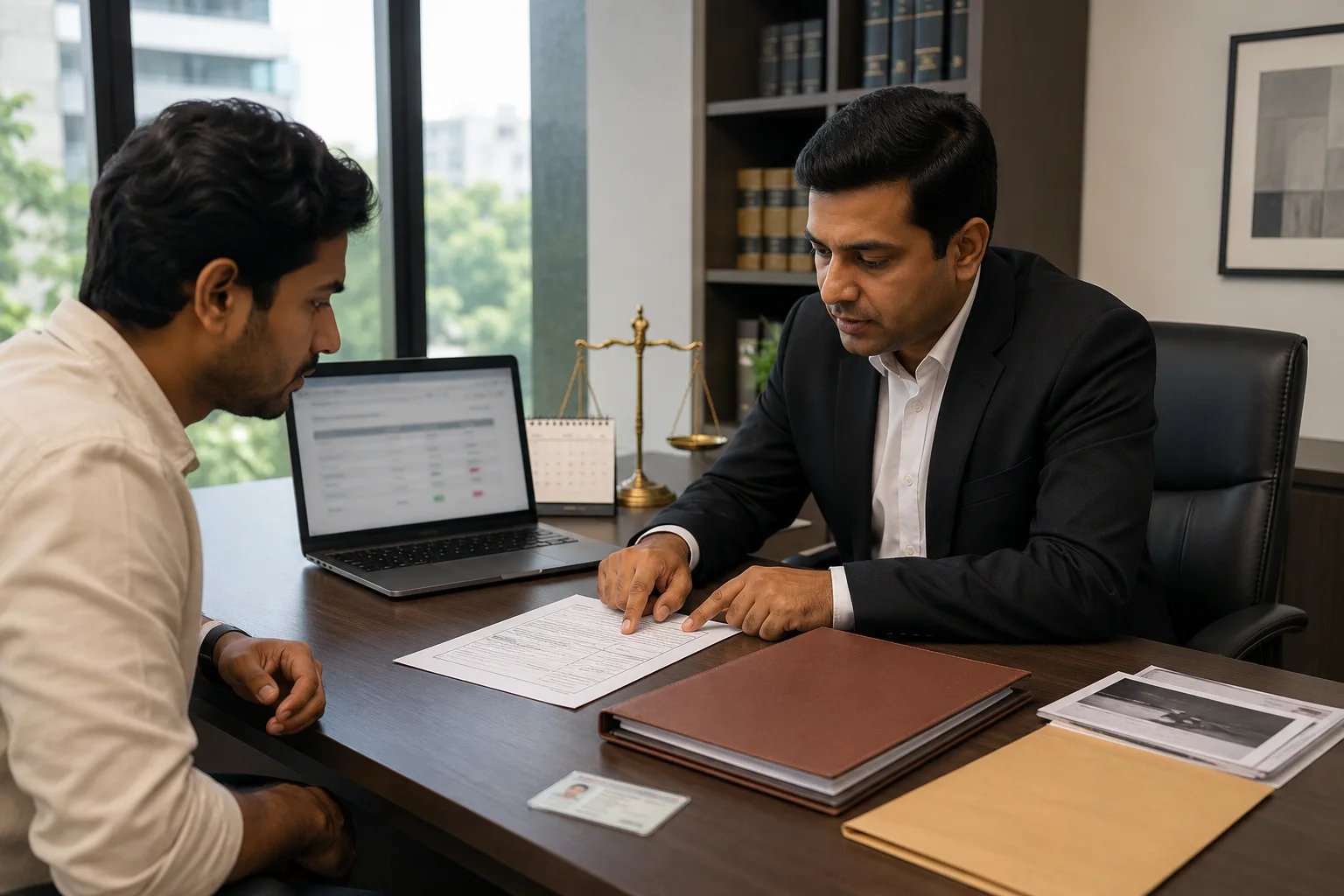
Verify the document quickly, identify your role, preserve the records, and prepare before the hearing date.
Use this practical checklist:
- Check the court name, case number, CNR number, parties, date, seal, and required action.
- Search the official eCourts Services portal using the CNR number or other available case details.
- Save the envelope, delivery receipt, email, message, attachment, and screenshots.
- Collect contracts, notices, payment records, messages, property papers, or other relevant evidence.
- Avoid emotional replies or admissions to the opposite party.
- Consult an advocate before the deadline.
A defendant in a private dispute may need assistance from civil lawyers in Bangalore. An accused person may need guidance from criminal lawyers in Bangalore.
Can a Lawyer Appear Instead of You?
An advocate may appear in some cases, but personal attendance is not automatically excused.
Section 228 BNSS allows a Magistrate to permit an accused person to appear through an advocate. However, the Magistrate may require personal attendance at a later stage.
In a civil case, a properly instructed advocate may usually appear for a party, subject to the summons and court directions.
The safer approach is to:
- Show the summons to an advocate.
- Check whether personal attendance is mentioned.
- File an exemption or representation application when required.
- Obtain the court’s permission instead of simply remaining absent.
What Happens If You Ignore Court Summons?
Ignoring duly served court summons may lead to serious procedural consequences. The exact result depends on the type of case, the stage of the proceedings, the reason for absence, and whether the court is satisfied that service was proper.
In a criminal case, an arrest warrant does not automatically follow every missed summons. Section 90 of the BNSS allows a court to issue a warrant only after recording reasons. The court may consider stronger action when it believes that the person:
- Has absconded or is avoiding the legal process
- Is unlikely to obey the summons
- Failed to attend despite proper and timely service
- Has not given a reasonable explanation for the absence
The court must examine the surrounding facts instead of mechanically issuing a warrant after one missed hearing. It may consider whether the person actually received the summons, whether there was enough time to appear, and whether illness, travel, an emergency, or another genuine difficulty prevented attendance.
A person who cannot attend should not simply remain absent. They should usually inform their advocate and seek an exemption, adjournment, or other appropriate direction from the court. Acting before the hearing date may reduce the risk of stricter orders.
In a civil case, the consequences are different:
- Proved service followed by absence may allow the court to proceed ex parte.
- Unproved or defective service should normally result in fresh summons.
- Service received too late to prepare may lead to postponement of the hearing.
- Repeated absence may increase costs, delay the case, and weaken the absent party’s opportunity to present a defence.
An ex parte hearing means the court may hear the matter without the absent defendant’s participation. However, this does not mean that the claimant automatically wins. The court must still examine the available material and decide the case according to law.
There is no fixed rule requiring every court to issue two or three summonses before taking further action. The next step depends on proper service, the nature of the case, previous conduct, court directions, and whether the absence appears deliberate or unavoidable.
The safest approach is to verify the summons, note the hearing date, preserve proof of service, and obtain legal advice before the deadline before taking stronger action. The result depends on service, conduct, case type, and the court’s satisfaction.
Court Summons vs Legal Notice vs Arrest Warrant
These documents differ in authority and purpose, so each requires a different response.
| Document | Issued by | Main purpose | What it means |
|---|---|---|---|
| Legal notice | Person or advocate | Raise a demand or seek settlement | Litigation may not have started |
| Court summons | Court | Require appearance, reply, evidence, or records | A formal proceeding requires action |
| Arrest warrant | Court | Authorise arrest and production | An authorised officer may execute it |
Read the difference between a lawyer notice and a court notice for a detailed comparison.
Cheque-bounce matters show the sequence clearly. A statutory demand notice usually comes before the complaint, while court summons may follow after the case begins. The cheque-bounce case filing process explains these stages.
Can Court Summons Come Through WhatsApp or Email?

Electronic court summons can be valid when the BNSS, State rules, and court directions permit it.
Sections 63 and 64 BNSS recognise authenticated electronic summons and permit electronic service in the prescribed manner. An ordinary WhatsApp message containing legal language is not automatically genuine.
Before responding to a digital summons:
- Search the case on eCourts.
- Match the party names and hearing date.
- Check the seal or digital authentication.
- Verify the sender and attachment.
- Confirm the document through an advocate or court registry.
Do not ignore court summons simply because it arrived digitally. At the same time, never send money or sensitive personal information without confirming that the message is genuine.
Prashastha Legal Take
The best way to examine court summons is to check three things: authority, service, and required action.
Confirm that the court and case exist. Check when and how the summons was served. Then identify whether you must attend, file a reply, produce evidence, or seek representation through an advocate.
Understanding the summons meaning in law helps you respond correctly. The exact summons procedure depends on the type of case and your role in it.
Early review gives you time to collect evidence, raise valid objections, and avoid preventable orders. Waiting until the hearing date can reduce your options and create unnecessary legal complications.
Respond Before the Court Date
A summons should lead to action, not panic. Verify the document, note the hearing date, preserve all records, and understand what the court expects from you.
Prashastha Legal assists individuals, professionals, property owners, and businesses with civil and criminal court matters in Bengaluru. The legal team can review the summons, explain the next procedural step, help organise relevant documents, and guide you on whether personal appearance, a written reply, or representation through an advocate may be required.
Timely legal guidance can protect your opportunity to respond, reduce the risk of ex parte orders or stricter court action, and prevent avoidable delays. Acting early also gives you more time to prepare evidence, clarify service issues, and comply with court directions properly.
If you have received court summons, do not wait until the hearing date. Seek legal advice as early as possible and take the correct step based on the nature of the case.
FAQs About What Is Summon in Law and Court Summons
The following answers address common questions about the summons procedure, electronic service, legal representation, and court attendance.
1. Does court summons mean I will be arrested?
No. A summons requires appearance or another stated action. It does not itself authorise arrest.
2. Can I ignore summons if the allegations are false?
No. Challenge false allegations through the proper court process. Ignoring summons may allow the matter to proceed without your response.
3. Can summons be served on a family member?
Yes, in certain situations. The law may allow service on an adult family member who resides with the recipient.
4. Is a WhatsApp summons valid in India?
It may be valid when applicable rules permit electronic service and delivery can be proved. Always verify the case and document.
5. What documents should I take to court?
Carry the summons, identity proof, attached case papers, and requested records. Ask your advocate whether original documents are required.
6. How many summons come before a warrant?
There is no fixed number. The court considers proper service, non-appearance, reasonable excuse, and the recipient’s conduct.
7. Can my advocate attend without me?
Sometimes, when the court permits it or personal attendance is unnecessary. Do not assume exemption without checking the summons and court order.
8. How can I verify court summons?
Check the CNR or case details on eCourts, inspect the authentication, and confirm the document through an advocate or the court registry.
Conclusion
Understanding what is summon in law helps you respond calmly and correctly. A court summons should never be ignored, whether it relates to a civil dispute, criminal case, witness appearance, or document production. Verify the case details, note the hearing date, and take legal advice before the deadline. For criminal court matters, you can consult experienced criminal lawyers in Bangalore to understand the summons procedure and prepare the right legal response.