

Property Documents Checklist for Buying Property in India
A complete property documents checklist helps buyers verify whether a property has a clear title, valid approvals and no undisclosed legal or financial claims. Before buying property in India, you should check the title deed, previous ownership records, Encumbrance Certificate, tax receipts, revenue records, sanctioned plans and seller identity documents.
The legal documents required for purchase of property vary according to the type of transaction. A resale apartment, residential plot, inherited property and under-construction project will not require exactly the same records.
However, every reliable property documents list should begin with these essential papers:
- Current title deed or ownership document
- Mother deed and previous transfer deeds
- Encumbrance Certificate
- Khata, mutation or applicable revenue records
- Latest property tax receipts
- Seller identity and authority documents
- Sanctioned building plan or approved layout
- Occupancy Certificate and Completion Certificate
- RERA and builder documents, where applicable
- Agreement for sale and registered sale deed
This property documents checklist should be completed before you make a large token payment or sign the final sale documents.
1. Current Title Deed or Property Ownership Document

The current title deed is one of the most important property ownership documents. It shows how the seller acquired ownership or legal rights over the property.
Depending on the transaction, the ownership document may be a registered sale deed, gift deed, partition deed, release deed, allotment deed or court decree. The seller’s name, registration details, property address, survey number, measurements and boundaries should match the other documents.
When reviewing this part of the property documents checklist, confirm:
- The seller named in the deed is the person offering the property for sale.
- The deed contains the correct survey number, property number and boundaries.
- The document has been registered where registration was legally required.
- The property description matches the property being shown to you.
The Transfer of Property Act, 1882 states that a contract for sale does not by itself create an interest in immovable property. A completed sale generally requires a properly executed and registered instrument.
Buyers should also understand the distinction between a title deed and sale deed before treating one document as complete proof of ownership.
2. Mother Deed and Previous Title Documents
The mother deed and previous transfer deeds establish the property’s chain of title. They explain how ownership passed from one owner to the next until it reached the present seller.
These records are an essential part of the legal documents required for purchase of property because the current seller cannot transfer a better title than the title they legally possess.
A proper title chain should not contain:
- Missing transfer documents
- Unexplained ownership gaps
- Differences in survey numbers or measurements
- Transfers completed without all legal owners
- Unresolved claims from co-owners or legal heirs
Lawyers often review a substantial period of ownership history, commonly around 30 years. However, the appropriate period depends on the age of the property, source of ownership, inheritance history and availability of earlier records.
A buyer should not treat the latest sale deed as sufficient when earlier property ownership documents are missing or inconsistent.
3. Encumbrance Certificate
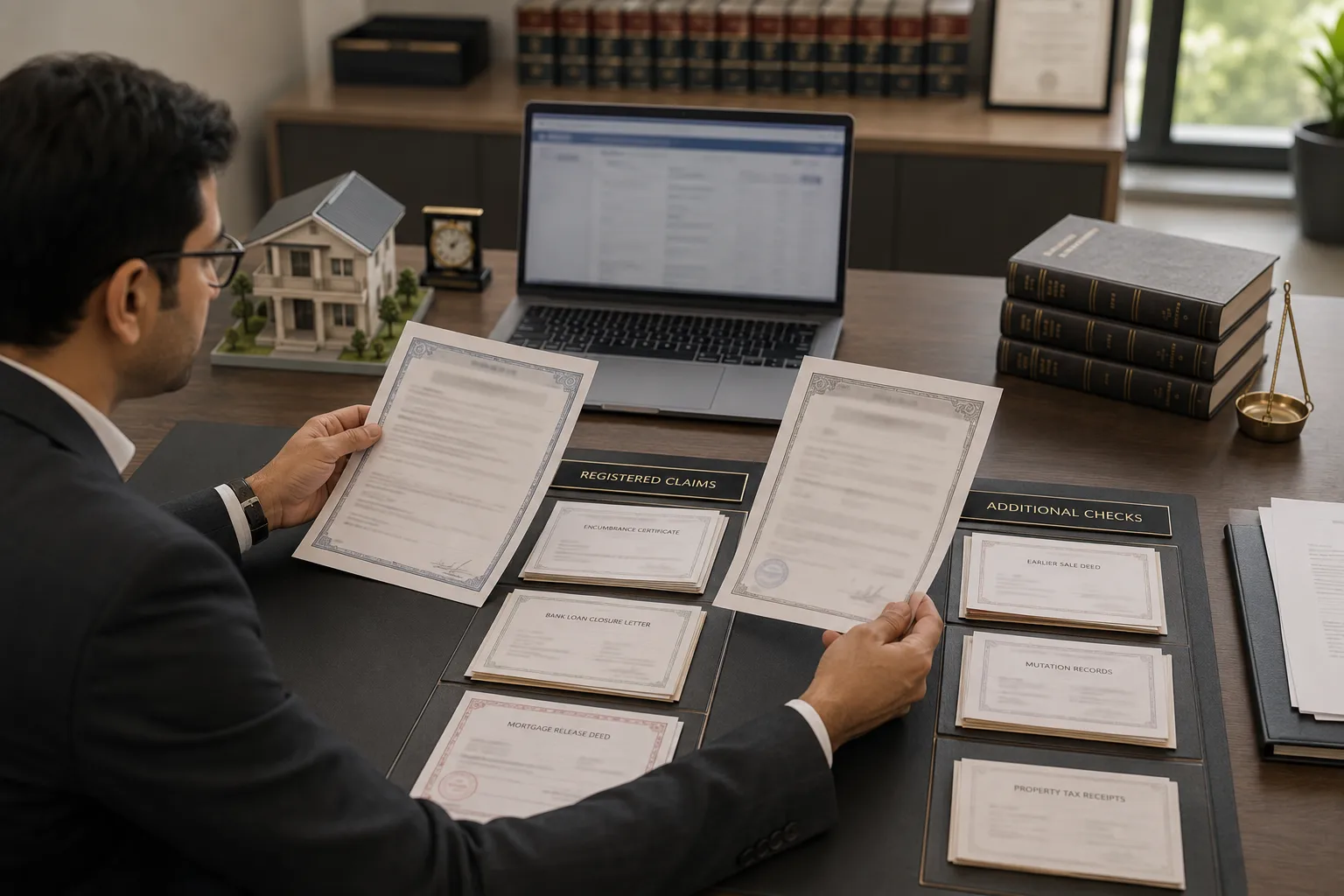
An Encumbrance Certificate, commonly known as an EC, records certain registered transactions affecting the property during the selected search period. It may show registered sales, mortgages, gifts, release deeds and mortgage discharge entries.
The EC is therefore a central document in any property documents checklist, especially when the buyer wants to check whether the property has been mortgaged or transferred earlier.
| An EC may show | An EC may not show |
|---|---|
| Registered mortgages | Unregistered loans |
| Earlier registered sales | Every family dispute |
| Gift and release deeds | Physical possession conflicts |
| Registered mortgage releases | Transactions outside the search period |
The EC should always be compared with the title documents. If the property was previously financed, ask for a bank loan closure letter, mortgage release deed and confirmation that the original documents have been returned.
For Karnataka properties, this guide to the Encumbrance Certificate in Karnataka explains how the record supports property verification.
An EC is useful, but it should not be treated as a complete certificate that the property is free from every legal dispute.
4. Khata, Mutation and Revenue Records
Khata, mutation, RTC, Patta, 7/12 extract, Jamabandi and Khatauni are important entries in a state-specific property documents list. These records usually support municipal taxation, land administration and revenue management.
They may contain the recorded owner’s name, property number, survey number, land extent, classification and tax assessment information.
While checking these records:
- Match the recorded owner with the title deed.
- Compare the survey number and total area.
- Check whether the latest transfer has been updated.
- Confirm that the land classification suits the proposed use.
Mutation and revenue entries do not independently create title. The Supreme Court has clarified that mutation entries mainly serve fiscal or administrative purposes. (api.sci.gov.in)
Bengaluru buyers should also understand the difference between A Khata and B Khata while preparing their property documents checklist.
5. Property Tax Receipts and No-Dues Records
Latest tax receipts form an important part of the legal documents required for purchase of property. They help buyers check whether municipal or land revenue payments are pending.
For apartments, buyers should also ask for maintenance statements and a no-dues confirmation from the owners’ association. Pending dues may create disputes after possession even when the seller has a valid title.
Your supporting property documents list should include:
- Latest property tax paid receipts
- Electricity and water bills
- Society maintenance receipts
- Betterment or development charge receipts
- Land revenue payment records, where applicable
Check whether the owner’s name, property identification number and address match the title deed and municipal records.
6. Seller Identity and Authority Documents
The person selling the property must be the legal owner or someone who has valid authority to act on behalf of the owner.
Seller identity records are therefore essential property ownership documents for preventing impersonation, unauthorised sales and fraudulent transfers.
Match the title records with the seller’s:
- PAN
- Aadhaar or another government identity document
- Address proof
- Signature
- Photograph
Additional documents may be required in special situations.
- Inherited property: Check the death certificate, will, probate where applicable, legal-heir records, succession documents, release deeds and partition records.
- Power of Attorney transaction: Review the original Power of Attorney, its validity, permitted powers and registration status where required.
- Company-owned property: Verify company records, board resolution and the authority of the person signing the sale documents.
A Power of Attorney authorises a person to act for the owner. It does not independently transfer ownership to the attorney holder.
7. Sanctioned Building Plan and Layout Approval
A sanctioned building plan confirms what the competent authority has approved for construction. For a plotted development, an approved layout plan identifies plots, roads, civic spaces and other layout details.
These approvals belong in every property documents checklist for a flat, house or residential plot.
For buildings, compare:
- Approved floor and unit details
- Setbacks and building dimensions
- Parking areas
- Permitted building use
- Actual construction
For plots, confirm the plot number, measurements, access road and planning authority approval. A property may have valid ownership documents but still face problems if the building or layout lacks the required approval.
8. Documents for Purchase of Land
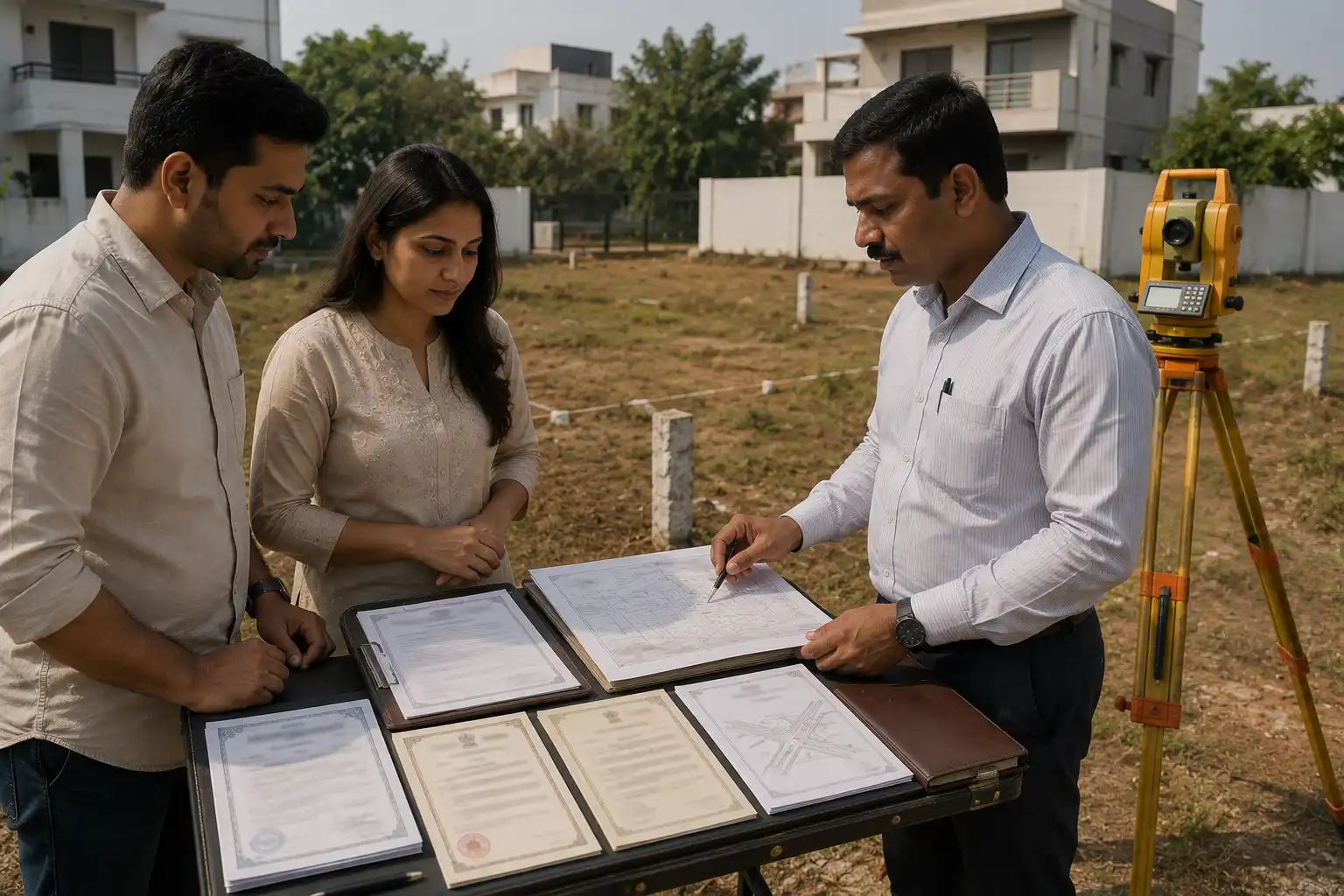
The documents for purchase of land require closer examination because title, land use, boundaries, access and survey records can create separate risks.
A complete land property documents list should normally include:
- Current and earlier title deeds
- Revenue records
- Mutation extract
- Survey sketch and boundary map
- Property tax or land revenue receipts
- Conversion order, where required
- Approved layout plan
- Encumbrance Certificate
- Access-road documents
Arrange a physical survey where necessary. The site boundaries, measurements and survey numbers should match the deed and official survey records.
The documents for purchase of land should also confirm whether the property is affected by acquisition notices, grant restrictions, tenancy claims or land-use limitations. Do not assume that a visible road automatically creates lawful access to the plot.
9. RERA and Builder Documents
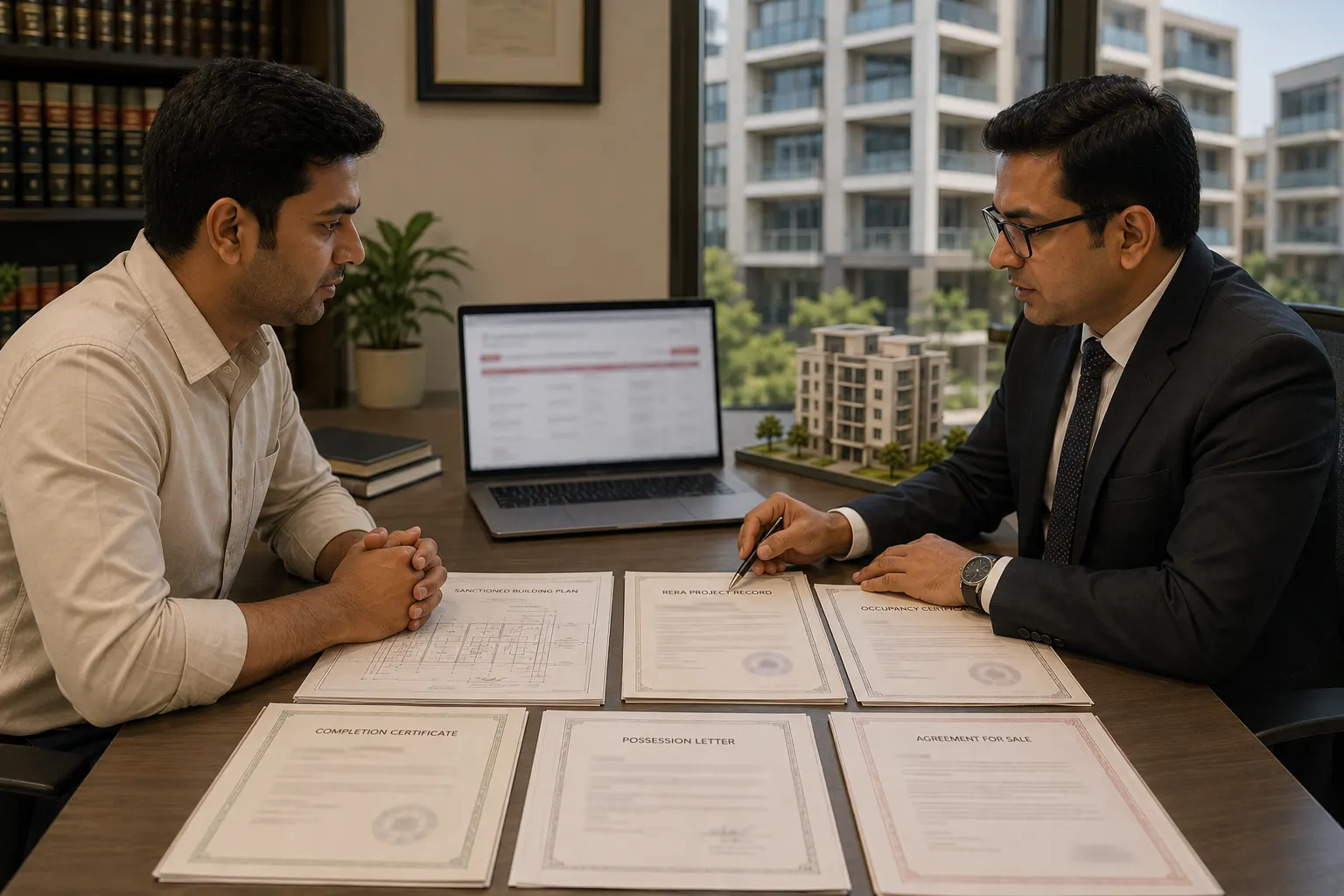
For an under-construction property, the legal documents required for purchase of property include records relating to both the land and the project.
Projects covered by the Real Estate (Regulation and Development) Act generally require registration before they are advertised, booked or sold, subject to statutory exemptions. (indiacode.nic.in)
The builder-related property documents checklist should include:
- RERA project registration details
- Developer’s land title documents
- Joint Development Agreement, if applicable
- Registered Power of Attorney
- Sanctioned building plan
- Commencement approval
- Draft agreement for sale
Section 13 of RERA restricts a promoter from collecting more than 10% of the property cost as an advance without first entering into a written and registered agreement for sale. (indiacode.nic.in). A RERA registration number is important, but it should not replace independent title verification.
10. Occupancy Certificate and Completion Certificate
The Occupancy Certificate and Completion Certificate are important documents for a completed or ready-to-move property.
A Completion Certificate generally confirms that construction has been completed according to the relevant approval process. An Occupancy Certificate indicates that the competent authority has permitted occupation of the building.
Before purchasing a flat, compare:
- Occupancy Certificate
- Completion Certificate
- Sanctioned plan
- Possession letter
- Actual construction
These documents should form part of the property documents checklist for resale and ready-to-move apartments. A possession letter from the builder does not replace an Occupancy Certificate where the law requires one.
11. Agreement for Sale
The agreement for sale records the price, payment schedule, property description, possession date, seller obligations and default conditions agreed between the parties.
This agreement is one of the most important legal documents required for purchase of property before the final sale deed is registered.
It should clearly cover:
- Time allowed for title verification
- Refund if the title is defective
- Seller’s obligation to clear loans and dues
- Responsibility for taxes and registration charges
- Deadline for completing the sale
- Consequences of buyer or seller default
Do not pay a large non-refundable amount before completing the property documents checklist. The agreement should explain what happens if a major document is missing or a title defect appears.
12. Registered Sale Deed
The registered sale deed is the principal document through which a completed sale and transfer of ownership are formally recorded.
Before registration, confirm that the final deed contains the correct parties, purchase price, property description, boundaries, measurements, possession terms and rights being transferred.
Section 17 of the Registration Act requires registration of specified documents that create, declare, assign, limit or extinguish rights in immovable property. (indiacode.nic.in)
Karnataka buyers can review the sale deed registration process before completing the transfer.
The registered deed should be checked against every important record in the property documents list before it is signed.
Additional Property Documents Based on the Transaction
Not all buyers need the same records. Your property documents checklist must be adjusted according to the type of property.
For a resale apartment
- Previous sale deed
- Allotment letter
- Possession letter
- Occupancy Certificate
- Completion Certificate
- Association no-dues certificate
- Bank loan release papers
- Transfer NOC, where applicable
Read more about the NOC for property transfer in Bangalore.
For inherited property
- Death certificate
- Will
- Probate, where required
- Legal-heir or succession records
- Partition deed
- Release deeds from other heirs
For a residential plot
- Title deeds
- Revenue records
- Survey sketch
- Conversion order
- Layout approval
- Access-road records
- Tax receipts
Red Flags in the Property Documents List
A buyer should pause the transaction when important records are missing, inconsistent or difficult to verify.
Common warning signs include:
- Missing original ownership deeds
- Different survey numbers across documents
- Unreleased bank mortgages
- Excluded co-owners or legal heirs
- Unclear Power of Attorney authority
- Unapproved construction
- Unpaid taxes or society dues
- Pressure to complete the sale immediately
A home loan approval does not replace an independent property documents checklist. The lender examines its financial security, while the buyer must examine ownership, possession and resale risk.
Prashastha Legal Take
A strong property documents checklist is not about collecting as many papers as possible. Every document must support the same ownership history and describe the same property.
Before approving a purchase, buyers should ask:
- Does the seller have a valid and transferable title?
- Do all property ownership documents match?
- Are any loans, heirs, disputes or approvals missing?
- Can the buyer safely possess and later resell the property?
Prashastha Legal recommends obtaining a written title opinion before making a substantial payment. It can distinguish minor document gaps from serious ownership defects.
Conclusion
The main legal documents required for purchase of property include the current title deed, mother deed, previous transfer deeds, Encumbrance Certificate, mutation or revenue records, tax receipts, seller identity, approved plans, agreement for sale and registered sale deed.
The complete property documents list will depend on whether you are purchasing land, a flat, an inherited property or an under-construction unit. The documents for purchase of land will usually include additional survey, conversion, boundary and access records.
For a professional review of your property documents checklist, agreement and ownership records, consult experienced property lawyers in Bangalore before making a substantial payment.
FAQs About the Property Documents Checklist
These frequently asked questions explain the most important property ownership documents and legal checks required before buying property in India.gal review.
1. What Is Included in a Property Documents Checklist?
A property documents checklist includes the title deed, earlier ownership records, Encumbrance Certificate, mutation or revenue documents, tax receipts, approved plans, seller identity and agreement for sale.
2. What Are the Main Legal Documents Required for Purchase of Property?
The main legal documents required for purchase of property are the current title deed, mother deed, previous transfer records, EC, tax receipts, municipal records, approved plans and final sale deed.
3. What Documents Are Required for Purchase of Land?
The documents for purchase of land generally include title deeds, revenue records, mutation extract, survey sketch, conversion order, approved layout, tax receipts and Encumbrance Certificate.
4. Is a Sale Deed Enough to Prove Property Ownership?
No. The sale deed is important, but the earlier title chain, mortgages, revenue records, seller authority and legal claims must also be verified.
5. Does Khata Prove Ownership?
No. Khata is mainly a municipal assessment and taxation record. It should be included in the property documents checklist, but it does not replace a registered title deed or complete title verification.
6. Is an Encumbrance Certificate Enough?
No. An Encumbrance Certificate mainly reflects certain registered transactions during the selected period. It should be checked along with title deeds, bank records, litigation searches and possession details.
7. Which Documents Are Required for a Resale Flat?
The property documents list for a resale flat includes the seller’s sale deed, earlier title records, EC, tax receipts, Occupancy Certificate, Completion Certificate, association records and mortgage release documents.
8. Should the Property Documents Checklist Be Completed Before Token Payment?
Yes. Buyers should complete at least an initial property documents checklist before making a large or non-refundable token payment. The token receipt or agreement should include a refund condition if title verification fails.