Partition Suit in Bangalore: A Practical Filing Guide
To file a partition suit in Bangalore, identify the property, check the basis for your share, and list everyone whose ownership may be affected. Gather the supporting records and file a plaint, the written claim that starts the case, in the civil court with jurisdiction over the property.
A partition suit asks the court to divide jointly owned property and, where appropriate, give each claimant separate possession of their share. It can help when co-owners disagree about who owns what, which assets should be divided, or whether an earlier transfer affected their rights.
Who Can File a Partition Suit?
Start by identifying a legal basis for your share. Your claim may come from a joint purchase, inheritance after a death, or rights in Hindu joint family property.
A joint purchaser, an heir who acquired a share, or an eligible coparcener may have grounds to file. A coparcener is someone with rights by birth in certain Hindu joint family property. The guide to ancestral property rights in India explains when an inherited asset may give rise to that kind of claim.
When checking who can file a partition suit, also make a list of everyone whose rights the court may need to decide. Flag any death, sale, gift, release deed, or earlier family settlement. If someone bought a disputed share, tell your advocate so they can assess whether that buyer should be included.
Where to File a Partition Suit in Bangalore
Start with the property’s exact location and check the relevant court limits. This matters near Bengaluru’s boundaries and when the dispute involves more than one property.
Sections 16 and 17 of the Code of Civil Procedure explain the general rule for filing where the property is situated and the conditions that apply when the properties span different court areas. The court must also be competent to hear the claim.
Use the ward or village, site or survey number, and boundaries to check jurisdiction. For example, if the dispute covers a Bengaluru flat and land outside the city, bring the details of both properties. Check the applicable court limits before naming a court in the plaint.
Documents Required for a Partition Suit
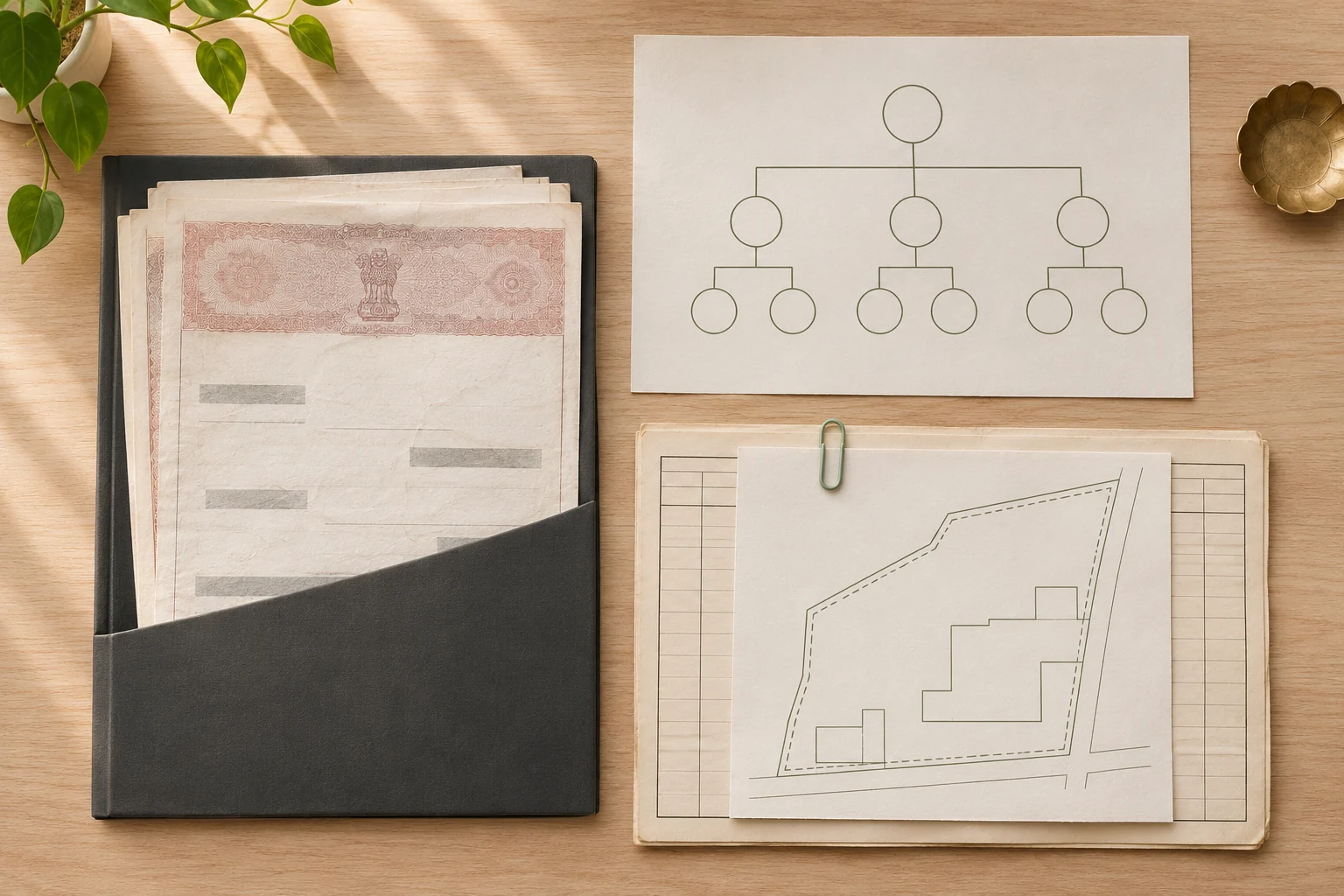
Sort your records by what they help establish. You need to identify the property, show how you acquired your claimed share, and explain who has possession.
The documents required for a partition suit depend on how the property changed hands and what the parties dispute. Start with these records where relevant.
- Ownership. Sale deeds, gift deeds, earlier partition or release deeds, and records showing the chain of ownership.
- Claimed share. Death certificates, a family tree, a will, or succession records if you claim through inheritance.
- Property details. Site or survey numbers, boundaries, extent, khata or RTC records, tax receipts, and an encumbrance certificate.
- Dispute and possession. Notices, replies, rent records, or messages showing who uses the property and when the disagreement arose.
Use the property documents checklist to identify missing records. Note who holds any original you cannot access and ask whether a certified copy is available. Flag mismatched property numbers or names. Khata and tax records can help trace the property, but they do not prove title by themselves.
Partition Suit Procedure in Bangalore
The partition suit procedure starts with a written claim and continues through filing, replies, and evidence. If further division is needed, the court proceeds towards a final decree.
Step 1. Prepare the plaint
State what you want divided, how you acquired your claimed share, who else has an interest, who is in possession, and what orders you seek. Include a property schedule that identifies each asset. If you dispute an earlier deed, raise that before filing so your advocate can assess which relief to request.
Step 2. Assess the court fee and file the suit
Section 35 of the Karnataka Court-Fee and Suits Valuation Act treats joint possession differently from denial of title or exclusion from possession. Assess the fee based on the pleadings, valuation, and relief sought. File the plaint and supporting papers in the competent court and address any defects it identifies during scrutiny.
Step 3. Serve summons and review the replies
After the court issues summons, defendants can file written statements. They may dispute your share, rely on an earlier partition, or object to an asset being included in the suit.
Step 4. Raise urgent concerns and consider settlement
If someone threatens to transfer or alter the property, ask your advocate whether to seek a temporary injunction. Filing the suit does not automatically grant one. If the parties reach an agreement during the case, they can ask the court to record the settlement.
Step 5. Present evidence and establish the shares
If the dispute continues, the court frames the issues it needs to decide and hears the evidence and arguments. Where the division needs more work, a preliminary decree can identify the properties to be divided and declare the parties’ shares.
Step 6. Complete the division through the final decree
If the preliminary decree leaves the actual division open, the court continues the same suit towards a final decree. It may appoint a commissioner to propose a division. See how preliminary and final decrees work for an example.
Preliminary Decree and Final Decree
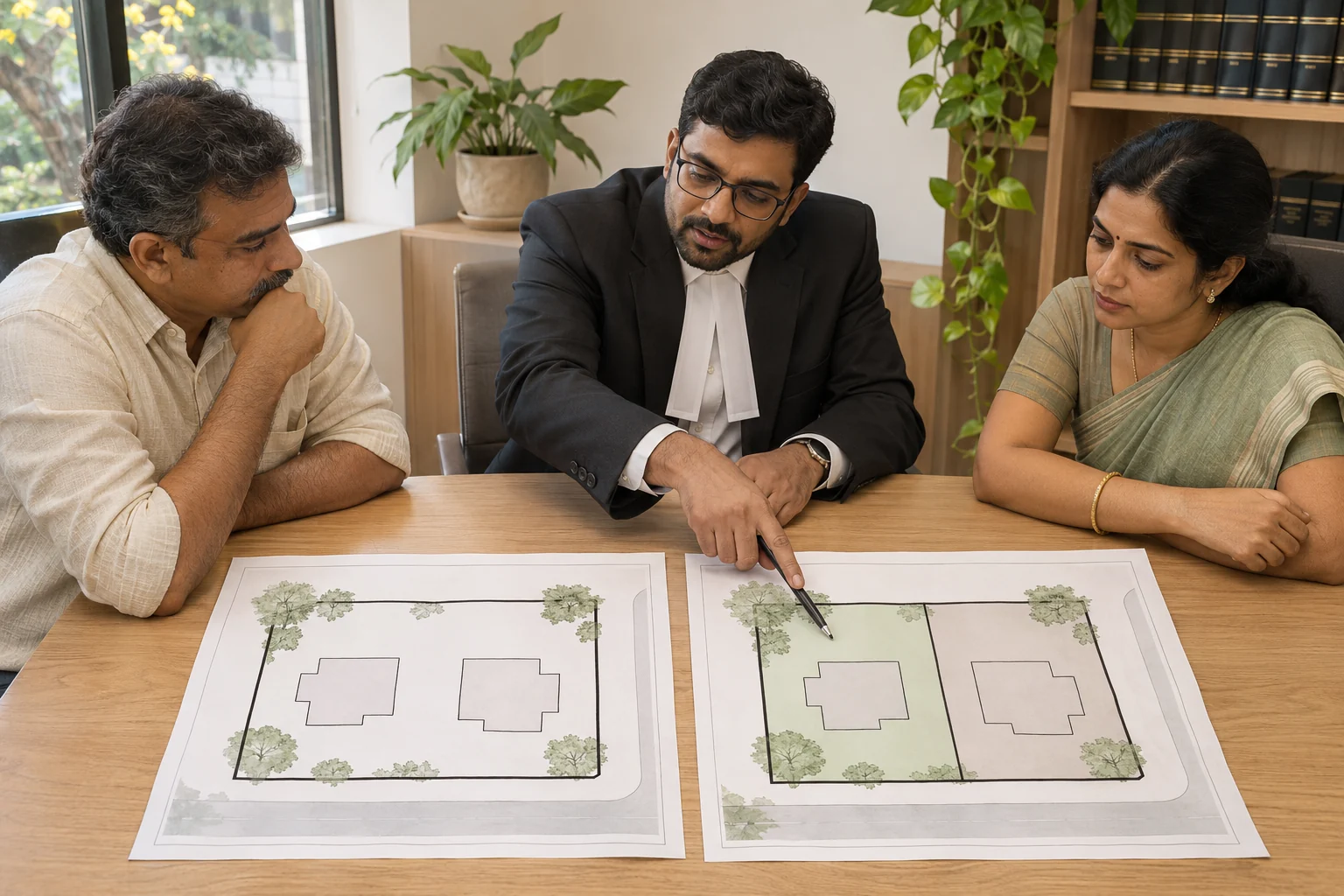
A preliminary decree can establish each party’s share. When the court needs more work to divide the property, final decree proceedings put those shares into effect.
Suppose two siblings dispute their rights in a Bengaluru house and an adjoining plot. The court may first decide which assets belong in the suit and declare each person’s share. It may then appoint a commissioner to inspect the property and propose how it could be divided. The parties can raise objections before the court decides the allotment.
If physical division is impractical, a sale and distribution of proceeds may be possible where the legal conditions apply. The Karnataka High Court’s circular on final decree proceedings directs trial courts to continue the case towards a final decree where a preliminary decree has left division outstanding.
Partition Deed vs Partition Suit
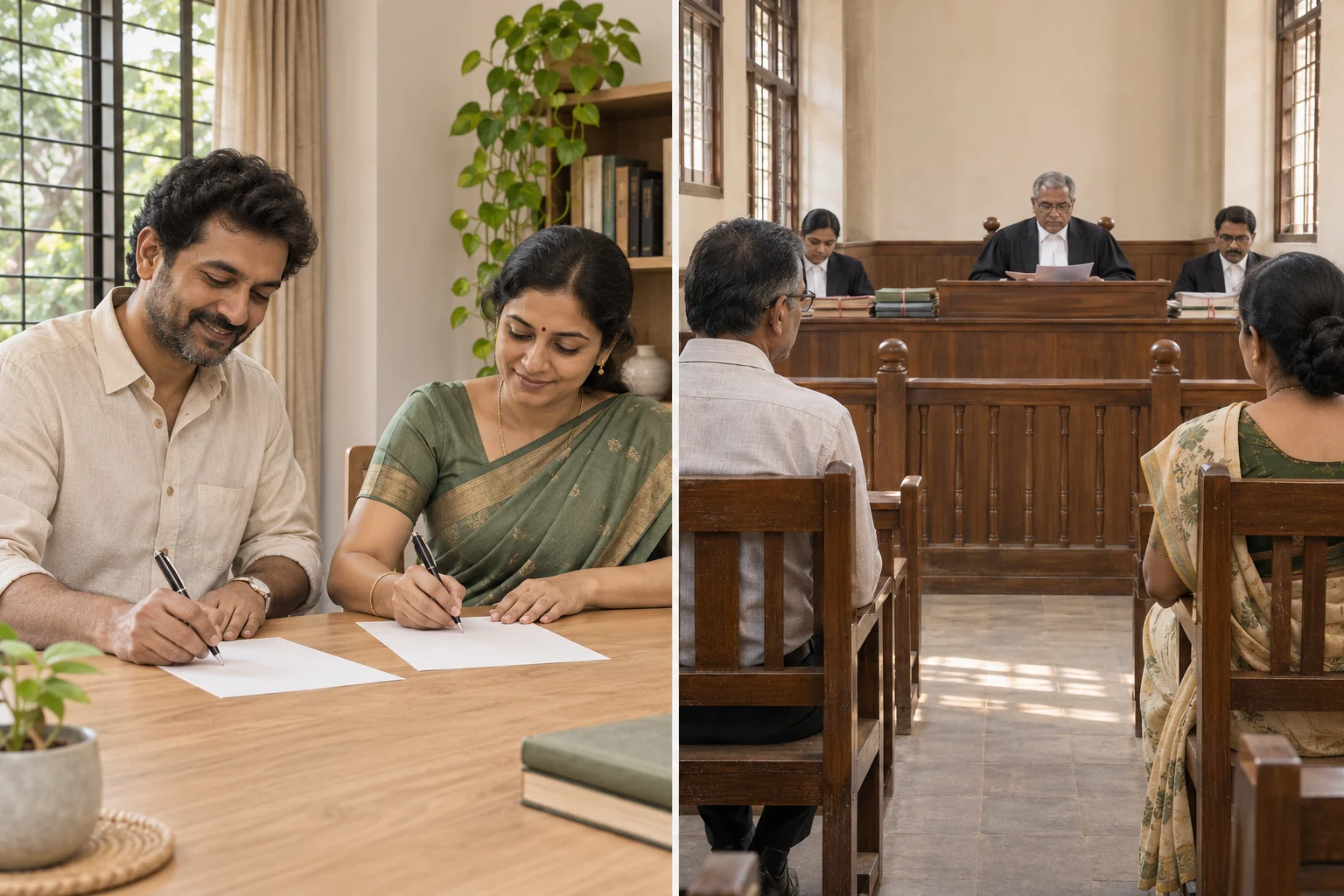
The main difference is who decides the division. With a deed, co-owners agree on the terms. With a suit, a civil court resolves the contested issues.
| What to compare | Partition deed | Partition suit |
|---|---|---|
| When it fits | Co-owners agree on the shares and how to divide the property. | Co-owners disagree about their shares, the properties involved, or how to divide them. |
| Who decides | Co-owners settle the terms and record them in the deed. | The court decides disputed issues based on the parties’ claims and evidence. |
| What you get | A deed that records the agreed division, with registration where required. | A court decree that declares shares, directs division, or sets out the next steps, depending on the case. |
Co-owners who agree on the shares and division can use our guide to preparing and registering a partition deed in Bangalore to understand the documentation process.
Prashastha Legal’s Perspective
Before filing, put the property history on one page. A timeline helps you connect each claimed share to a document and spot gaps in the records.
List the purchase or acquisition, later transfers, relevant deaths, and when the dispute arose. If you are preparing a partition suit in Bangalore, our property lawyers in Bangalore can review the timeline, the basis for your claimed share, and where the suit should be filed.
Frequently Asked Questions About Partition Suits
If you’re considering a partition suit in Bangalore, these FAQs explain who can file, what to do if documents are missing, how long the case may take, and whether co-owners can settle after filing.
1. Who can file a partition suit?
A co-owner or someone with a legal basis for claiming a share can generally file a partition suit even if the other co-owners disagree. The claim may arise from a joint purchase, inheritance, or rights in joint family property.
2. Can a married daughter file a partition suit?
Yes, if she has a legally recognised share in the property. Marriage alone does not take away a daughter’s coparcenary rights. Her claim depends on the nature of the property, the applicable succession law, and any earlier transfers or partitions.
3. What documents are required for a partition suit if the original deed is missing?
Start with the records you have, such as copies of title deeds, inheritance records, and documents identifying the property. If another co-owner holds the original deed, note who has it and check whether you can obtain a certified copy.
4. Is there a time limit for filing a partition suit?
It depends on the claim and the facts. Exclusion from possession, denial of your share, or a challenge to an earlier transfer can raise different limitation questions. The dates and documents matter when assessing the claim.
5. How long does the partition suit procedure take?
There is no fixed timeline. The number of parties, service of summons, disputes over ownership, and the evidence required can all affect how long the case takes. If the court first declares the shares, working out the actual division may take additional time.
6. Can co-owners settle after filing a partition suit in Bangalore?
Yes. Co-owners can reach an agreement while the suit is pending and ask the court to record it. The terms should clearly identify what each person receives and how possession will be handed over.