
What Is Charge Sheet? Vital India Law Guide
A charge sheet is the police report filed before a Magistrate after investigation, when the police believe an offence appears to have been committed by one or more accused persons. In simple words, the answer to what is charge sheet is this: it is not a conviction, but it is the formal document that moves a criminal case from police investigation toward court proceedings.
Under the Bharatiya Nagarik Suraksha Sanhita, 2023, or BNSS, the older CrPC process has been updated for new criminal procedure from 1 July 2024. India Code records BNSS as Act No. 46 of 2023, enforced from 01-07-2024.
What Is Charge Sheet in Law?
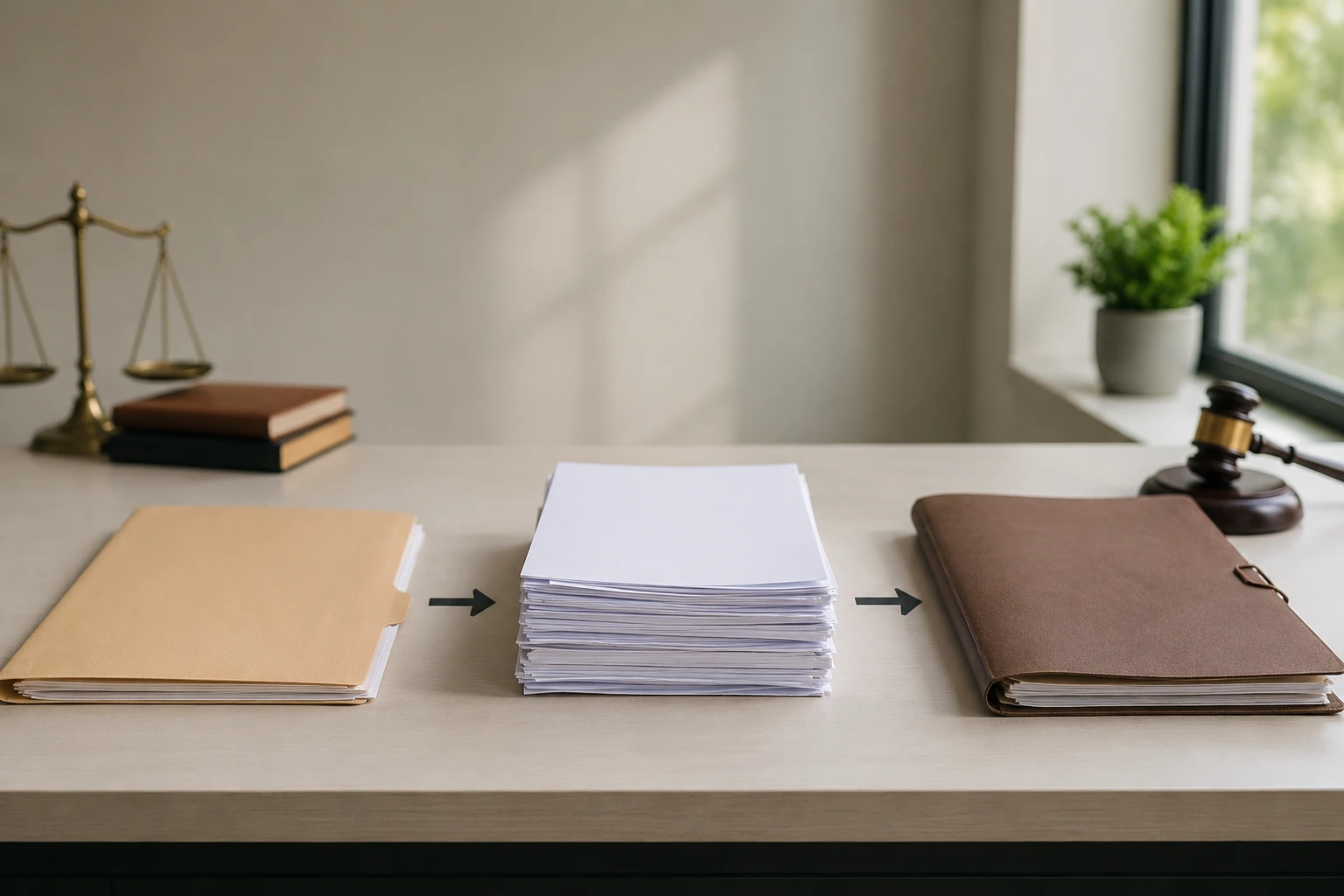
A charge sheet in law is the investigating officer’s final police report sent to the court after collecting evidence, statements, documents, and case details.
The legal idea is simple. Police receive information, register an FIR where required, investigate the facts, then submit a report to the Magistrate. If police find material showing that an offence appears to have been committed, the report is commonly called a charge sheet. If they find no sufficient material, they may file a closure report.
For readers comparing criminal and civil matters, this is one reason criminal procedure works differently from private disputes. You can read more in Prashastha Legal’s guide on the difference between civil law and criminal law.
Chargesheet Meaning in Simple Words
Chargesheet meaning is often misunderstood. It does not mean the accused is already guilty. It means the police have formed an opinion that the case should go before court.
The Magistrate still has to examine the report. The court may take cognizance, issue summons, commit the case to a higher court where required, or consider discharge depending on the facts and law.
This distinction matters. A weak charge sheet can be challenged. In some cases, a person may explore bail, discharge, or quashing remedies with legal advice. For serious allegations, speaking to experienced criminal lawyers in Bangalore helps avoid mistakes at the first court stage.
What Does a Police Charge Sheet Contain?

A police charge sheet usually contains the names of parties, nature of information, witness details, arrest status, custody details, evidence relied on, and the officer’s conclusion.
BNSS Section 193(3) states that after investigation, the officer in charge forwards a report to the Magistrate. The report includes names of parties, nature of information, names of persons acquainted with the case, whether an offence appears to have been committed and by whom, arrest and bail status, custody details, medical report details in specified cases, and the sequence of custody in case of electronic devices.
| Part of charge sheet | What it usually shows |
|---|---|
| Case details | FIR number, police station, offence sections |
| Accused details | Name, address, arrest or bail status |
| Witness list | People police may rely on |
| Evidence list | Documents, objects, digital records, reports |
| Police conclusion | Why police believe the case should proceed |
A police charge sheet sample may vary by State format, offence type, and special law. So, a sample should only be used to understand structure, not to judge the strength of a real case.
Charge Sheet vs FIR vs Charge vs Closure Report
A charge sheet comes after investigation. An FIR starts the investigation. A charge is framed by the court. A closure report is filed when police do not find enough material.
This difference avoids a lot of confusion. An FIR records first information about a cognizable offence. A charge sheet presents the investigation result. A court charge comes later, when the court decides what exact offence the accused must face at trial.
A closure report is different. Police file it when they conclude that no offence is made out, evidence is insufficient, or the accused cannot be traced. The complainant may get a chance to object, depending on the stage and facts.
Chargesheet Time Limit in India

The general chargesheet time limit is usually understood as 60 or 90 days for default bail purposes when the accused is in custody, but special laws and offence categories can change the position.
BNSS Section 187(3) allows custody beyond fifteen days only within limits. It sets 90 days for offences punishable with death, life imprisonment, or imprisonment of ten years or more, and 60 days for other offences. After that period, the accused must be released on bail if prepared to furnish bail.
For certain serious sexual offences under BNS and specified POCSO offences, BNSS Section 193(2) requires investigation to be completed within two months from the date the information was recorded by the police officer in charge.
Here’s the thing: this does not mean every FIR in India automatically ends in 60 days. The impact depends on custody, offence section, special statute, court orders, and whether default bail is applied for at the correct time. For bail-related help, these guides on types of bail in India and how to get bail in Bangalore may help.
What Happens After Charge Sheet Is Filed?

After the charge sheet is filed, the court examines whether there is enough material to proceed. The accused receives copies, and the next stage may involve appearance, bail, discharge, framing of charge, or trial.
The Supreme Court has explained that charge sheet documents are not public documents for everyone, but the accused must receive the police report and prosecution documents relied upon before inquiry or trial.
The complainant or victim should also track the case after filing. BNSS has added stronger communication duties. The Press Information Bureau notes that Section 193 requires police to inform the informant or victim about investigation progress within 90 days and also includes rules for further investigation after filing.
Can You Check an Online Chargesheet?

You may track case status online, but an online chargesheet is generally not available for unrestricted public download.
The eCourts Services Portal allows users to check case status, court orders, cause lists, and related case information using CNR number or other case details. Some police portals and CCTNS-linked services may show FIR or complaint-related updates, depending on the State and user access.
But do not assume that every online chargesheet can be downloaded like a public notice. The Supreme Court has clearly rejected the idea that all charge sheets and supporting documents must be uploaded publicly.
Prashastha Legal Brand Take
A charge sheet should be read like a diagnostic report, not like a final judgment. The real question is not only “what sections are added?” but “what material supports each allegation?”
Look at the timeline, witness statements, digital evidence custody, medical or forensic reports, and whether the accused’s role is clearly explained. In technical terms, the charge sheet is only as strong as its inputs, testing, chain of custody, and final reasoning.
For false or legally weak cases, the right remedy may include discharge, bail, or High Court proceedings. In suitable matters, Prashastha Legal’s guide on grounds for quashing of FIR can help you understand the broader legal route.
FAQs on What Is Charge Sheet
These FAQs answer the most common questions people ask about charge sheets in India, including chargesheet meaning, time limits, online access, and what happens after filing.
1. What is charge sheet in simple words?
A charge sheet is the final police report filed in court after investigation. It tells the Magistrate what offence police believe happened and who may be responsible.
2. What is the chargesheet meaning in criminal law?
Chargesheet meaning in criminal law is a formal police report that asks the court to proceed against the accused based on investigation material.
3. Is a charge sheet proof of guilt?
No. A charge sheet is not proof of guilt. The prosecution must still prove the case in court through evidence and witnesses.
4. What is the chargesheet time limit in India?
For default bail purposes, the usual limit is 60 days for most offences and 90 days for offences punishable with death, life imprisonment, or ten years or more.
5. Can I download an online chargesheet?
Usually, a charge sheet is not freely available for public download. Parties may track case status online, but copies are normally obtained through court process.
6. What happens if police do not file a charge sheet on time?
If the accused is in custody and the legal time limit expires, the accused may apply for default bail, subject to the offence, statute, and timing.
7. Can a charge sheet be challenged?
Yes. Depending on the facts, an accused may seek discharge, bail, further legal remedy, or quashing before the High Court in appropriate cases.
8. What is the difference between FIR and charge sheet?
An FIR starts the criminal investigation. A charge sheet is filed after investigation when police believe there is material to proceed in court.
Conclusion
A charge sheet is a major step in a criminal case, but it is not the end of the matter. It only places the police version before the court, and the next legal step depends on the facts, evidence, offence sections, and court procedure.
If you are an accused person, complainant, family member, or business owner facing a criminal complaint, do not rely only on informal updates. Check the court record, understand the chargesheet time limit, preserve your documents, and take timely legal advice.
At Prashastha Legal, our team helps clients understand charge sheets, bail options, criminal case strategy, court procedure, and possible remedies such as discharge or quashing where the law permits. If you need clear guidance after a charge sheet is filed, consult our legal team for practical and timely support.