

Title Deed vs Sale Deed: Crucial Legal Difference
Buying property is one of the biggest financial decisions for any family or business. But many buyers get confused when they hear terms like title deed, sale deed, ownership proof, and registration.
This confusion can lead to risky decisions, especially when large payments happen before legal verification. This guide explains title deed vs sale deed in simple terms, so you know what to check before signing property papers.
Title deed vs Sale deed explained in simple terms
A title deed proves property ownership, while a sale deed transfers ownership through a sale. In the title deed vs sale deed comparison, the title deed shows who legally owns the property and how ownership was received. The sale deed records the buyer, seller, sale price, property details, and transfer terms.
In simple terms, what is a title deed? It is proof of legal ownership, supported by past records and title history. What is sale deed? It is the final sale document that gives legal shape to the property transfer.
The sale deed meaning comes from the legal idea of sale under Indian property law. Sale means transfer of ownership for a price paid, promised, or partly paid. So, the main difference between sale deed and title deed is purpose. The title deed proves ownership, while the sale deed creates the transfer during a sale.
Title deed vs sale deed comparison

Title deed vs sale deed becomes easier to understand when you compare their purpose. One proves ownership, while the other records the actual property sale.
| Basis | Title Deed | Sale Deed |
| Meaning | Proof of legal ownership | Legal document for sale transfer |
| Main purpose | Shows who owns the property | Transfers property from seller to buyer |
| Legal effect | Confirms ownership rights | Creates transfer through sale |
| When it is used | During title verification and ownership proof | During property sale and registration |
| What it contains | Ownership history and supporting title records | Buyer, seller, price, property details, and terms |
| Registration role | May include registered documents | Usually needs stamping and registration |
| Example | Sale deed, gift deed, partition deed, or court decree | Registered sale deed after property purchase |
| Buyer risk | Weak title can lead to disputes | Defective sale deed can affect transfer rights |
A buyer should check both before paying major money. A registered sale deed helps little if the seller never had a clear title.
What is a title deed
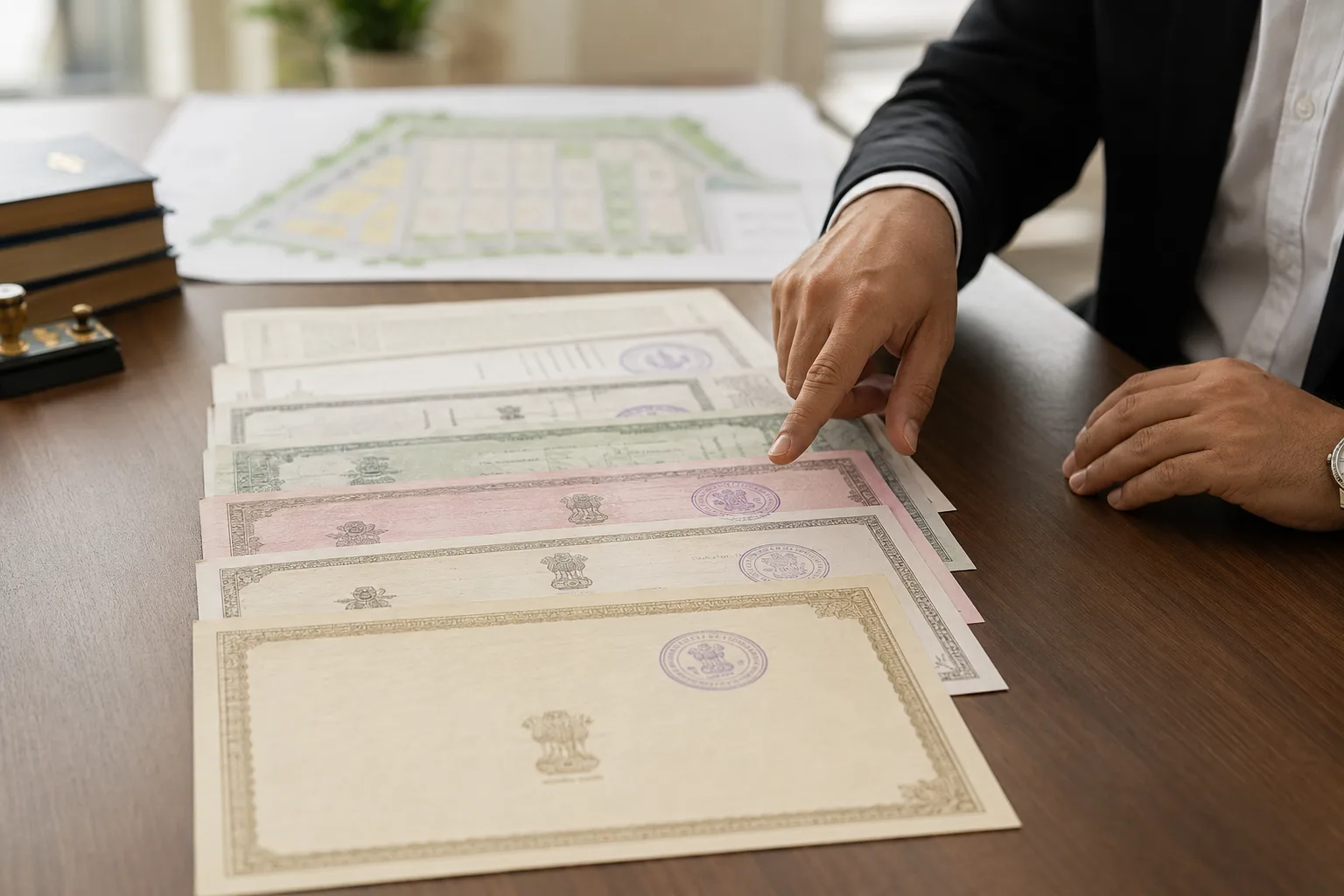
A title deed is not always one single document in India. It often means the document, or set of documents, that proves ownership. For Karnataka-specific guidance, buyers can also read this detailed guide on the title deed of property in Karnataka.
For example, a title may come from different legal records. The exact document depends on how the owner got the property.
Common title documents may include:
- Sale deed
- Gift deed
- Partition deed
- Will or succession papers
- Court decree
- Allotment letter
- Release deed
This is why lawyers check the chain of title. They study past transfers to confirm whether each owner had the right to transfer the property.
A clear title usually means the property has no major ownership dispute. It also means there are no serious legal claims, unpaid loans, or hidden restrictions.
What is sale deed

A sale deed is a legal document used when property gets sold. It records the core details of the transaction. If you are dealing with property in Bangalore or Karnataka, this guide on sale deed in Karnataka explains the process in more detail.
A proper sale deed usually includes:
- Buyer and seller details
- Full property description
- Sale price and payment terms
- Date of transfer
- Possession details
- Seller’s ownership declaration
- Indemnity and dispute clauses
The sale deed meaning is simple in daily language. It is the final sale document that gives legal shape to the property transfer.
A sale deed should match the approved property description. It should include boundaries, survey number, flat number, and share in common areas. It must also confirm that the seller has a lawful right to sell. This clause matters because a buyer cannot receive better title than the seller has.
How both documents work in property deals
The title deed vs sale deed difference becomes clear when you see their role in a property deal. The title deed helps confirm who owns the property, while the sale deed shows how ownership gets transferred from the seller to the buyer.
Many people use both words as if they mean the same thing. That happens because a registered sale deed often becomes the buyer’s main title deed after purchase. Still, the two ideas are not identical, because a sale deed is only one type of title document.
This point matters in inherited, gifted, or partitioned property. In such cases, the seller may prove title through succession papers, a partition deed, a gift deed, or court records instead of a recent sale deed.
Why this confusion can affect buyers
Many property disputes start because buyers trust one document too quickly. They may see a registered sale deed and assume the title is fully safe. This mistake often happens when buyers skip legal due diligence before paying the advance amount.
But ownership depends on the complete history of the property. A missing heir, unpaid loan, wrong boundary, or earlier dispute can still create problems later. These issues can affect mutation, resale, loan approval, and peaceful possession.
This is why buyers should not rush after seeing only one paper. They should confirm whether the sale deed matches a clean and traceable title chain. A proper review helps buyers spot red flags before the transaction becomes difficult to reverse.
Sale deed meaning under Indian law
Indian law treats sale of immovable property with care. Section 54 of the Transfer of Property Act defines sale as transfer of ownership for a price. This price may be paid fully, promised, or partly paid and partly promised.
For most immovable property, the transfer usually needs a registered instrument. Section 17 of the Registration Act also explains when registration becomes compulsory for property-related documents. A registered sale deed creates a formal record and gives stronger proof of the transaction.
Indian courts have also clarified in the Suraj Lamp judgment that an agreement to sell, GPA, receipt, or will usually cannot replace a registered sale deed. This does not mean title checking ends with registration. Lawyers still examine title, possession, payment proof, and encumbrances before calling a property legally safe.
Why registration alone does not prove clean title

Registration gives a sale deed legal strength. It creates an official public record of the transaction and supports the buyer’s ownership claim. Yet it does not automatically cure every defect in the seller’s title.
A buyer can face trouble if the seller sold inherited property without all heirs. Problems can also arise from a mortgage, litigation, forged earlier papers, or unpaid property dues. These issues may surface only after the buyer applies for mutation of property in Karnataka, resale, or loan approval.
That is why title deed vs sale deed should not become a shortcut question. The safer question is whether the sale deed fits within a clean title chain. Buyers should confirm the seller’s ownership, past transfers, encumbrance certificate in Karnataka records, and possession before completing the deal.
Documents to check before signing

Property checks should happen before the final sale deed. These checks reduce risk and help the buyer understand the title deed position.
Important records usually include the previous sale deed, mother deed, and encumbrance certificate. Buyers should also check supporting records before signing.
Key documents to review include:
- Previous sale deed or mother deed
- Encumbrance certificate
- Property tax receipts
- Mutation records
- Approved building plan
- Possession papers
- RERA registration details, where applicable
- Occupancy certificate, where applicable
These documents do different jobs. Together, they show ownership history, property identity, dues, approvals, and the seller’s right to transfer. For Karnataka property-related services, buyers can also refer to the official Kaveri Online Services portal.
Prashashtha Legal Take
At Prashashtha Legal, our view is clear. The real risk is not confusion between two legal terms, but confidence without verification. Many buyers focus only on the final sale deed and miss the legal history behind the property.
A buyer may hold a sale deed and still face a title dispute. That usually happens when past ownership, inheritance, loans, or possession were never checked properly. These issues can create problems during resale, bank loan processing, mutation, or family claims.
We advise clients to treat title verification as a risk audit. It should happen before token payment, not after the sale deed draft reaches the sub-registrar. A careful review should check the seller’s authority, title chain, encumbrance status, tax dues, and possession records.
This approach saves time, money, and stress. It also helps buyers negotiate better, because legal clarity improves decision-making. When buyers know the exact legal position, they can ask the right questions, correct document gaps, or step away from unsafe deals.
When to consult a property lawyer
You should consult a property lawyer before signing major property papers. Legal review matters more in higher-risk situations.
Speak to a lawyer if the property is:
- Inherited by the seller
- Mortgaged or recently released from a loan
- Jointly owned by family members
- Old and transferred many times
- Under dispute or litigation
- Sold through power of attorney for property in Bangalore or unclear authority
- Missing approval or possession documents
A lawyer can review the title deed chain and sale deed draft together. This helps spot missing heirs, unclear boundaries, unpaid dues, or weak transfer rights. For deeper assistance, consult experienced property lawyers in Bangalore.
You should also seek help if the seller offers only GPA papers. The same applies when the seller says registration can happen later.
Conclusion
Understanding title deed vs sale deed helps buyers make safer property decisions. A title deed confirms ownership, and a sale deed completes the transfer through a property sale.
But legal safety depends on more than one document. Buyers should review the title chain, sale deed draft, possession records, and encumbrance details before making major payments.
If you are buying, selling, or verifying property, do not rely on assumptions. Consult Prashashtha Legal for title deed vs sale deed review, especially when there are signs of property disputes in Bangalore. A timely legal review can protect your money, documents, and ownership rights from hidden risks.
FAQs on title deed vs sale deed
These FAQs answer the most common questions buyers ask before signing property papers. They also explain how title deed vs sale deed affects ownership proof, registration, and legal safety.
1. Are title deed and sale deed the same?
No, they are not exactly the same. A title deed proves legal ownership of a property, while a sale deed records the actual sale between the buyer and seller. In many purchases, the registered sale deed later becomes an important title document.
2. What is a title deed in simple words?
A title deed is proof that a person legally owns a property. It also shows how the owner received the property, such as through sale, gift, partition, inheritance, or a court order. Buyers should check the title deed chain before purchase.
3. What is sale deed in simple words?
A sale deed is the final legal document used in a property sale. It transfers ownership from the seller to the buyer for an agreed price. It usually includes property details, payment terms, possession details, and seller declarations.
4. Is sale deed proof of ownership?
Yes, a registered sale deed is strong proof of ownership for the buyer. But it should be supported by a clean title chain, possession records, and encumbrance checks. A sale deed alone may not solve defects in earlier ownership.
5. Is an agreement to sell the same as sale deed?
No, an agreement to sell is different from a sale deed. An agreement records a promise to sell the property in the future. A sale deed completes the transfer after payment, stamping, registration, and other agreed conditions.
6. Which is more important, title deed or sale deed?
Both are important because they serve different purposes. A sale deed transfers ownership through a sale, while a title deed proves whether that ownership is legally valid. A safe purchase needs both proper transfer and clear title history.