

Hindu Marriage Act vs Special Marriage Act: Vital Guide
Hindu marriage act vs special marriage act mainly differs by religion, ceremony, and legal process. The Hindu Marriage Act applies when both partners are Hindus, Buddhists, Jains, or Sikhs and usually follows a valid religious ceremony. The Special Marriage Act applies to any eligible couple in India and allows a civil marriage without religious rituals or conversion. If both partners want a traditional Hindu marriage and registration, the Hindu Marriage Act may work better. If the couple wants an interfaith, intercaste, or secular court marriage, the Special Marriage Act usually gives clearer legal protection.
Hindu Marriage Act vs Special Marriage Act
The main difference between Hindu Marriage Act and Special Marriage Act is simple. The Hindu Marriage Act applies when both parties are Hindus, Buddhists, Jains, or Sikhs. It usually works after a valid religious marriage ceremony. The Special Marriage Act applies to any two eligible persons in India. It allows civil marriage without religious conversion or rituals.
So, if both partners want a Hindu ceremony and registration, the Hindu Marriage Act may suit them. If the couple is interfaith, intercaste, or wants a secular court marriage, the Special Marriage Act usually fits better.
The Hindu Marriage Act focuses on Hindu personal law. The Special Marriage Act gives a religion-neutral legal route. Both laws deal with marriage, divorce, maintenance, and legal status. But their process, eligibility, notice period, ceremony rules, and succession impact differ.
This guide explains hindu marriage act vs special marriage act in clear terms. It also covers what is Hindu Marriage Act, what is Special Marriage Act, and when each law applies.
What Is Hindu Marriage Act?
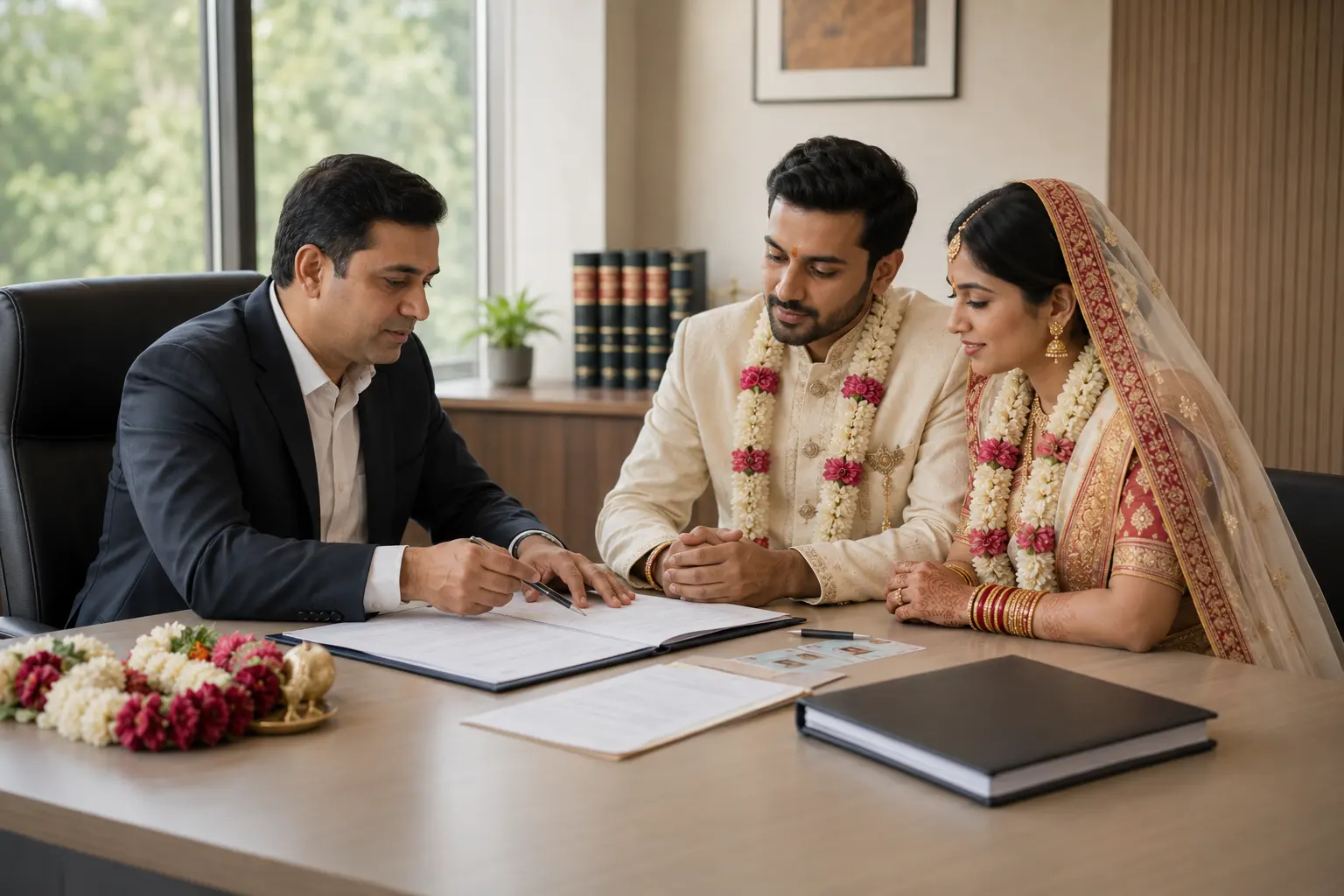
The Hindu Marriage Act, 1955, governs marriages between two Hindus. The law also includes Buddhists, Jains, and Sikhs within its scope. It sets legal conditions for marriage, divorce, maintenance, custody, and registration.
A valid Hindu marriage needs certain legal conditions. Both parties should be unmarried at the time of marriage. The bridegroom must be at least 21 years old. The bride must be at least 18 years old. For a clearer view of age-related risks, read our guide on child marriage law in India. Both parties must give valid consent. They should not fall within prohibited relationships, unless custom permits it.
The Act also gives importance to customary rites. If the custom includes saptapadi, the marriage becomes complete after the seventh step.
This point matters a lot. Registration helps prove the marriage. But registration alone does not create a Hindu marriage. The ceremony must happen as per valid custom.
What Is Special Marriage Act in India?

The Special Marriage Act, 1954, is a secular marriage law in India. It allows two eligible persons to marry without religious rituals. It also allows interfaith and intercaste couples to marry without conversion.
So, what is Special Marriage Act in practical terms? It is the legal path for civil marriage before a Marriage Officer. The couple gives notice, waits through the notice period, and completes solemnization with witnesses.
The law requires at least one party to reside in the district for 30 days before giving notice. The Marriage Officer then publishes the notice. Anyone can object within 30 days, but only on legal grounds.
After the notice period, the couple can solemnize the marriage. Three witnesses usually sign the declaration and certificate. The marriage certificate then becomes strong legal proof.
Hindu Marriage Act vs Special Marriage Act: Key Differences

A short comparison helps remove confusion. The table below shows the practical difference between Hindu Marriage Act and Special Marriage Act. These points help couples choose the correct route.
| Point | Hindu Marriage Act | Special Marriage Act |
| Applies to | Hindus, Buddhists, Jains, Sikhs | Any eligible persons |
| Nature | Personal law | Secular civil law |
| Ceremony | Religious custom needed | No ritual needed |
| Interfaith marriage | Not suitable unless conversion happens | Suitable without conversion |
| Notice period | Usually no 30-day public notice | 30-day notice applies |
| Common use | Registering Hindu marriage | Court marriage or civil marriage |
| Proof | Certificate supports proof | Certificate proves civil marriage |
The biggest practical difference is the ceremony. The Hindu Marriage Act respects religious custom. The Special Marriage Act creates a civil marriage through legal procedure.
Which Act Is Better for Court Marriage?
For court marriage, the Special Marriage Act usually applies. The Hindu Marriage Act does not conduct a fresh civil marriage before the registrar. It mainly helps register a Hindu marriage already solemnized by ceremony.
Many couples use the phrase court marriage for any registered marriage. That causes confusion. If you already had a Hindu ceremony, you may register it under the Hindu Marriage Act. If you want the registrar to solemnize the marriage, you usually need the Special Marriage Act.
This is the core difference for couples in Bangalore and other Indian cities.
Who Should Choose the Hindu Marriage Act?
Choose the Hindu Marriage Act when both partners fall under the Act. It suits couples who want a Hindu ceremony. It also suits couples who already completed a valid Hindu wedding.
This route often feels simpler for same-faith Hindu couples. The process may move faster because it does not need a 30-day public notice. State rules can still affect documents, fees, and appointment timelines.
The Hindu Marriage Act can help with visa, passport, bank, insurance, or property records. But the ceremony must be valid first.
Who Should Choose the Special Marriage Act?
Choose the Special Marriage Act when religion should not control the marriage process. It suits interfaith couples, intercaste couples, and couples who want civil marriage. It also suits couples who do not want religious conversion.
The Special Marriage Act gives a clear legal route. But it can take longer because of the notice period. The public notice rule can also create privacy concerns for some couples.
The law allows objections only on legal grounds. A person cannot object just because they dislike the marriage. Still, couples should prepare documents carefully. Small errors can delay the process. If the matter involves objections or civil legal complications, speaking with experienced civil lawyers in Bangalore can help.
Documents Usually Needed

Documents can vary by state and local office. Couples should check the current local marriage registration checklist before applying.
Commonly needed documents include:
- Age proof
- Address proof
- Passport-size photographs
- Identity proof for both parties
- Ceremony proof for Hindu marriage registration
- Divorce decree or death certificate, if relevant
- Witness identity and address proofs
- Affidavits, if the office asks for them
Never rely only on a generic checklist. Marriage offices may ask for format-specific forms.
Legal Effects Couples Should Understand

Both laws create legal rights and duties. They can also affect remedies like restitution of conjugal rights in India. But the consequences may differ in some cases.
Under the Hindu Marriage Act, succession usually follows Hindu succession rules. Under the Special Marriage Act, succession can shift to the Indian Succession Act in many cases. But if both spouses are Hindu, Buddhist, Sikh, or Jain, a special rule may preserve the usual Hindu succession position.
This is where legal advice matters. Couples often focus only on the wedding date. They miss effects on inheritance, family property, nominations, and future disputes. In strained marriages, these issues may later connect with division of property after divorce.
Divorce rules also differ in sections and wording. But both laws allow divorce on legal grounds. Both also allow mutual consent divorce, subject to legal conditions. Courts may also examine maintenance and alimony in divorce based on facts.
Prashastha Legal’s Practical View
At Prashastha Legal, our view is simple. Couples should not choose the law only by speed. They should choose it by legal fit.
A quick registration may look attractive today. But the wrong route can create problems later. It can affect proof of marriage, inheritance, divorce rights, and family objections.
For same-faith Hindu couples, the Hindu Marriage Act often works well. For interfaith or civil marriages, the Special Marriage Act usually gives safer legal clarity. The best choice depends on religion, ceremony, residence, privacy needs, and documents.
Our practical advice is to check three things first. Check eligibility, process, and future legal impact. That saves time, stress, and avoidable disputes.
FAQs on Hindu Marriage Act vs Special Marriage Act
1. What is the main difference between Hindu Marriage Act and Special Marriage Act?
The Hindu Marriage Act applies to Hindu, Buddhist, Jain, and Sikh couples. The Special Marriage Act applies to any eligible couple, regardless of religion.
2. What is Hindu Marriage Act in simple words?
The Hindu Marriage Act is India’s law for Hindu marriages. It covers marriage conditions, ceremonies, registration, divorce, maintenance, and related rights.
3. What is Special Marriage Act in India?
The Special Marriage Act is a secular law for civil marriage in India. It allows marriage without religious rituals or conversion.
4. Can interfaith couples marry under Hindu Marriage Act?
Usually, no. Both parties must fall under the Hindu Marriage Act. Interfaith couples usually choose the Special Marriage Act.
5. Is conversion needed under Special Marriage Act?
No. The Special Marriage Act allows marriage without conversion. That is one of its main benefits for interfaith couples.
6. Does Special Marriage Act require 30 days notice?
Yes. The couple must give notice to the Marriage Officer. The marriage can usually happen after the 30-day notice period.
7. Is a Hindu marriage certificate valid without rituals?
A certificate alone may not validate a Hindu marriage. The marriage should first happen through valid customary rites.
8. Which Act is faster for marriage registration?
The Hindu Marriage Act is often faster after a valid Hindu ceremony. The Special Marriage Act usually takes longer due to notice.
Conclusion
The choice between hindu marriage act vs special marriage act depends on the couple’s facts. The Hindu Marriage Act suits valid Hindu marriages. The Special Marriage Act suits civil, interfaith, and religion-neutral marriages.If you feel confused about eligibility, notice period, documents, or family objections, speak to Prashastha Legal. Our divorce lawyers in Bangalore can help with family-law concerns, while our civil lawyers in Bangalore can guide you on related civil legal issues.