Transfer of Joint Property on Death in India: A Complete Legal Guide
When a co-owner passes away, families often struggle to understand how the transfer of joint property on death actually works. The process depends on the type of ownership, the existence of a will, documentation, and state-specific rules. Once you know what to check and which steps to follow, things become far more manageable.
This guide breaks down everything—from the types of joint ownership of property to how to transfer joint property after a co‑owner died in India—into practical, easy-to-follow sections. For broader clarity on resolving land and title issues, you may also explore our guide on property disputes in Bangalore, covering joint property ownership, how to transfer joint property after a co-owner’s death in India, and more, organized into practical, easy-to-follow sections.
Types of Joint Property Ownership
A brief look at how ownership structures determine what happens after a co-owner’s death.

Joint Tenancy (JT)
Joint tenancy gives co-owners equal rights over the property, and includes the right of survivorship. When one owner dies, their share passes automatically to the surviving co-owner without probate.
Tenancy in Common
This is the most common form of ownership in India. There is no right of survivorship. Each co-owner holds a defined share, and upon their death, the share passes according to their will or under inheritance laws. For a deeper legal breakdown, you can refer to this external guide on the types of joint ownership in India. (TiC)
This is the most common form of ownership in India. There is no right of survivorship. Each co-owner holds a defined share, and upon their death, the share passes according to their will or under inheritance laws.
Co-Ownership Through Agreement
In many cases, co-owners refer to local property laws to understand rights and obligations. You can also read our detailed resource on the Encumbrance Certificate in Karnataka to understand how past transactions affect ownership rights.
Some properties are governed by written agreements outlining ownership percentages and succession rules. If such an agreement exists, authorities usually follow the terms unless they conflict with statutory succession laws.
Legal Implications in the Transfer of Joint Property on Death
A simple breakdown of how the law decides who inherits and what processes must follow.

Fate of the Property Based on Ownership
- Joint Tenancy: Survivor becomes the full owner.
- Tenancy in Common: Deceased’s share passes to heirs.
- Agreement-based Ownership: Terms apply if valid.
Succession Framework
If there is a will, the heir named inherits the share. If no will exists, inheritance follows:
- Hindu Succession Act
- Muslim personal laws
- Indian Succession Act for Christians/Parsis
Probate and Related Proceedings
Probate validates a will. If there is no will, heirs may seek a succession certificate or a legal heir certificate, depending on what the property transfer requires.
How to Transfer Joint Property After Co-Owner’s Death in India
A step-by-step roadmap for completing the transfer legally and efficiently.
Step 1: Check for a Will
Start by confirming whether the deceased left a registered, unregistered, or handwritten will. This helps determine who inherits the share and whether probate is required. If family members are unsure about the existence of a will, check with the Sub‑Registrar’s office, banks, the family lawyer, or personal storage like lockers and files.
Step 2: Obtain the Death Certificate
Apply for the death certificate from the local municipal authority or the designated online portal. This document is mandatory for all formalities, including bank updates, property transfer, insurance claims, and mutation. Make multiple certified copies—you will need them at various stages.
Step 3: Identify Legal Heirs
List all legal heirs according to the relevant personal law. This may include the spouse, children, and parents. If there is uncertainty or potential conflict, prepare a family tree affidavit to avoid disputes later.
Step 4: Obtain a Legal Heir Certificate
Approach the Tehsildar, corporation office, or revenue department to obtain this certificate. Submit essential documents like the death certificate, ID proofs, and an affidavit. This certificate is crucial for starting the transfer process, especially in TiC cases.
Step 5: Apply for Probate or Succession Certificate
Probate is required when a will exists (mostly compulsory in metro cities). When no will exists, a succession certificate may be required for movable assets; for property, a legal heir certificate often suffices.
Step 6: Execute a Relinquishment or Release Deed (If Multiple Heirs)
When one heir wishes to keep the full share, others may release their share formally through a registered deed.
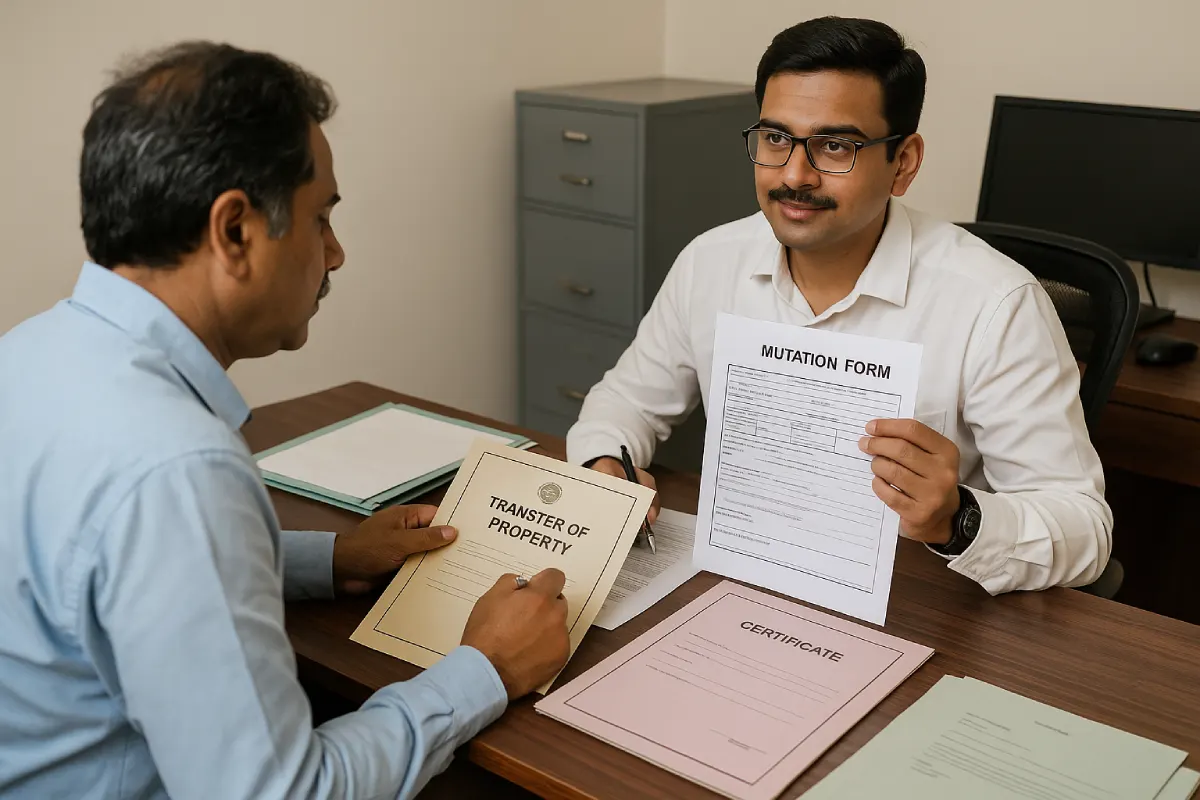
Step 7: Apply for Mutation of Property Records
Mutation updates municipal and land records to reflect the new ownership after a co-owner’s death. For more clarity on this process, see this detailed resource on the mutation of property in India.
If you’re navigating ownership changes after marital separation, our guide on the division of property after divorce offers additional perspective on handling asset transfers.
Submit the required documents to update land or municipal records.
Step 8: Pay Stamp Duty and Registration Fees
Applicable for deeds like relinquishment or gift deeds.
Step 9: Notify Banks and Creditors
If loans exist, banks require updated ownership records and related documents.
Challenges and Solutions
An outline of common roadblocks families face and practical ways to overcome them.
Common Challenges
- Disputes among heirs
- Missing documents
- No clarity on ownership type
- Absence of a will
- Delays in obtaining certificates
- Bank or municipal objections
Solutions
- Conduct a title review through legal experts
- Gather all original documents early
- Get NOCs from all heirs
- Use mediation when disputes arise
- Register all transfer documents properly
Financial and Tax Considerations
A quick guide to the expenses, taxes, and financial duties linked to property transfer.
Taxes on Inheritance
India does not levy an inheritance tax currently. However, stamp duty and registration fees may apply.
Financial Obligations
Outstanding loans, dues, or utility payments must be settled before or during the transfer process.
FAQs
How is property transferred after the death of a joint owner?
The transfer depends on the ownership type. In joint tenancy, it passes automatically to the survivor. In tenancy in common, heirs inherit through will or succession laws.
What is the best way to transfer property after death?
The best approach is to secure the death certificate, verify the will, obtain the legal heir certificate, and complete mutation through the concerned authority.
What happens to jointly owned property if one owner dies?
If it’s joint tenancy, the survivor becomes the full owner. If it’s tenancy in common, the deceased’s share passes to their legal heirs.
What is the time limit for property transfer after death?
There is no strict national deadline, but it’s best to initiate the process within 30–90 days to avoid disputes or document issues.
Conclusion
Transferring joint property after the death of a co-owner can feel overwhelming, especially when paperwork, legal steps, and family considerations come together. If you’re dealing with uncertainty about documents, inheritance laws, disputes, or municipal approvals, expert legal guidance can save you time and prevent costly mistakes.
If you want clarity on the legal process or need assistance from experienced real estate attorneys, you can consult our team of property lawyers in Bangalore. We help with documentation or support in resolving disputes. Reach out to Prashastha Legal. We’ll guide you through every step and help you secure a smooth, hassle-free transfer.