

Difference Between A Khata and B Khata in Bangalore
The difference between A Khata and B Khata comes down to compliance. An A Khata usually signals that the property meets key civic requirements, and the BBMP can treat it as fully valid in its records. A B Khata usually means that BBMP records the property for tax, but the property has legal or planning gaps that block many approvals.
What this really means is simple. With an A Khata, you can usually get bank loans, building approvals, and a smoother resale. With a B Khata, you may still pay property tax, but you often face roadblocks when you want a loan, renovation, expansion, or a clean sale.
This guide breaks down the a khata vs b khata difference in plain language, with buyer-focused steps, updated context about e-Khata, and a conversion roadmap.
What is a Khata in Bangalore (and why it matters)?

A Khata is a municipal property account. It links a property to an owner’s name for property tax assessment and basic civic records. In Bengaluru, buyers treat Khata like a quick “health check” for the property’s paperwork.
Here’s the key point many first-time buyers miss:
- Khata is not the same as title. The title comes from your sale deed and ownership chain.
- Khata still matters a lot. It affects loans, approvals, utility connections, and resale confidence.
So when you evaluate a Khata vs B Khata property, think of Khata as a civic signal that banks and authorities use to judge whether the property sits on solid ground.
Difference Between A Khata and B Khata (quick comparison)
The easiest way to understand the Difference Between A Khata and B Khata is to compare how each one behaves in real life.
| Factor | A Khata | B Khata |
| Status in civic records | Treated as compliant and fully valid | Can be delayed or refused depending on the case |
| Issuer (typical) | BBMP (for BBMP limits) | BBMP / related civic record systems (tax entry) |
| Home loan eligibility | Usually eligible (subject to bank checks) | Often rejected by banks due to risk |
| Building plan approval | Usually possible | Commonly blocked / highly difficult |
| Utility connections | Usually easier | Can be delayed or refused depending on case |
| Resale and transfer | Typically smoother | Buyers bargain hard; resale takes longer |
| Trade license (for commercial) | Generally possible | Often difficult |
If you remember one line, remember this: A Khata gives you permission pathways. B Khata gives you a tax record, not a clean permission pathway.
What is A Khata?

An A Khata indicates the property sits on the “approved” side of civic records. In most buyer situations, it means the property has met the requirements that BBMP expects for a fully compliant entry.
Who issues A Khata?
Inside the BBMP limits, the BBMP issues the Khata record. (Other local bodies issue their own versions outside the BBMP limits.)
Benefits of A Khata (why buyers prefer it)
When people say A Khata is “safe,” they usually mean it enables the things buyers care about:
- Eligibility for bank loans (subject to title, valuation, and bank policy)
- Building license and plan approval for eligible properties
- Electricity and water connections with fewer objections
- Ease of ownership transfer/sale because buyers and banks trust it more
- Trade license eligibility for commercial activity
That’s why the a khata vs b khata in Bangalore conversation matters so much. It’s less about taxes and more about what you can do with the property.
Common documents used for A Khata applications
Exact requirements can differ based on property type, but these are commonly needed:
- Title deed/sale deed
- Encumbrance certificate (EC) (how to get it: Encumbrance Certificate in Karnataka; official portal: Kaveri Online Services EC page)
- Property tax receipts
Depending on the case, authorities may also ask for plan approvals, land conversion records, khata extract, previous khata, and ID/address proofs.
What is B Khata?

A B Khata is usually a civic entry that helps BBMP track and collect property tax, even when the property has compliance issues. In short, it often indicates non-standard or incomplete approvals.
This is where buyers get confused. Many owners say, “I pay tax, so it must be legal.” That’s not how it works. Tax payment does not erase planning or land-use issues.
Why does a property become B Khata?
From a buyer’s standpoint, B Khata usually appears when the property has one or more of these issues:
- Building bylaw violations (setbacks, floor area, deviations)
- Construction on revenue land (or land with conversion problems)
- Unauthorized layouts (layout approval missing or unclear)
- Lack of Completion Certificate (CC) in many building scenarios
Different properties fall into B Khata for different reasons. Two B Khata properties are not equal. One might be close to regularisation. Another might carry a serious risk.
Risks and disadvantages of B Khata
This is the part most buyers care about, especially when you compare a khata vs b khata property:
- Ineligibility for home loans in many bank policies
- Prohibition of construction/expansion in many cases
- Difficulty in trading or selling because buyers fear future trouble
- Risk of demolition or enforcement action in serious violation cases
If the paperwork is messy, these issues often snowball into disputes about boundaries, title, or possession. If you want a practical overview of what those disputes look like and how they get handled, read: Property Disputes in Bangalore.
So the a khata vs b khata difference shows up at the exact moment you want a loan, plan approval, or a clean resale.
What is E Khata (and why everyone talks about it now)?

An E Khata is the digital version of an A Khata record (in most BBMP contexts). It digitises the Khata certificate and supports online access.
Features
- Online tax payment and record tracking
- Digital downloads and status tracking in many cases
Why e-Khata matters for approvals (2025 update)
Bengaluru has been moving towards tighter digital verification. From 1 July 2025, BBMP started requiring e-Khata for online building plan applications (see the notice on the BBMP BPAS portal), so the system can auto-verify ownership and tax data before it accepts your plan. If you plan to apply for a building plan online, you should assume you will need e-Khata details to pass basic ownership and tax verification.
Here’s the thing: this shift makes paperwork hygiene more important than ever. If your property still has older manual records, update your file set early. Don’t wait until you need a loan, a plan approval, or a resale.
Buyer tip: Always use official BBMP portals (like the BBMP e-Aasthi portal) for downloads and status checks. Avoid shortcuts and unofficial agents when the document will decide your loan or approval outcome.
How to convert B Khata to A Khata in Bangalore
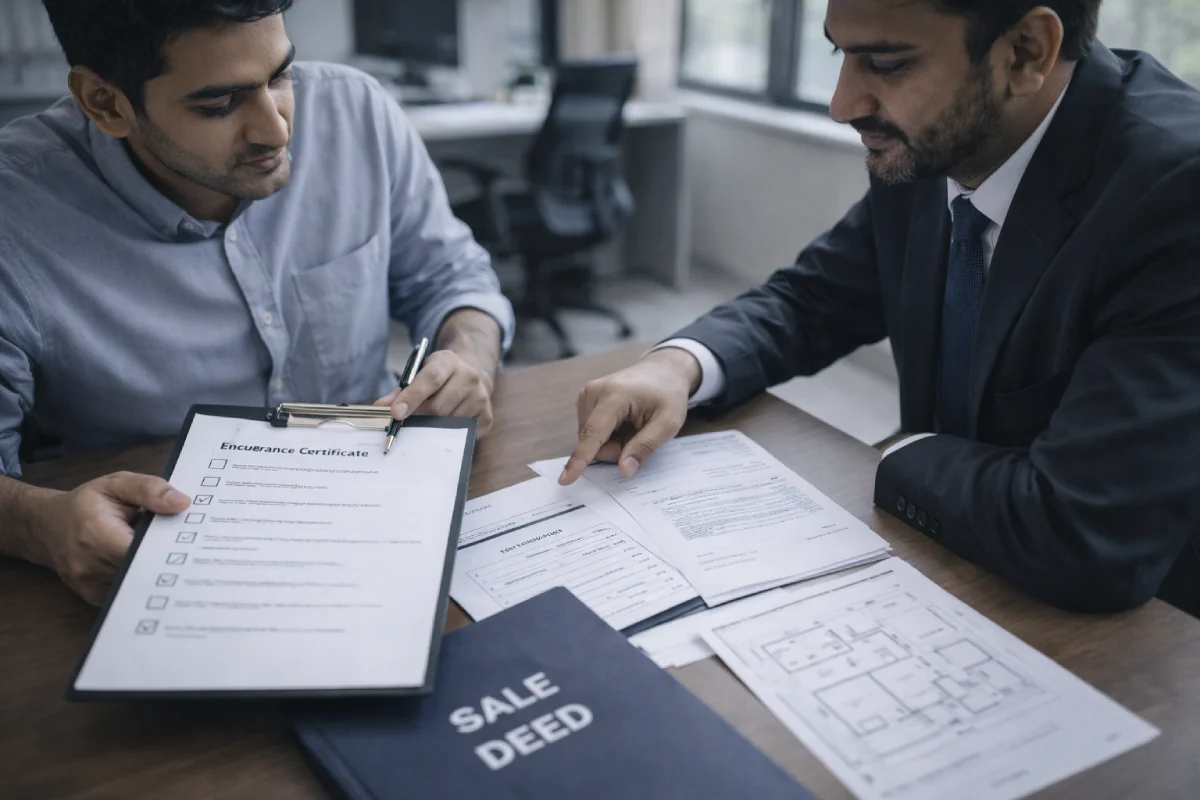
Let’s break it down. Conversion is not a single form. It’s a compliance clean-up.
In most cases, you need to show that:
- The land has the right conversion status,
- The layout/plot meets requirements,
- dues and charges are cleared,
- and the building (if any) meets basic compliance.
Common steps in B to A Khata conversion
Use this as a practical checklist:
- Clear all property tax dues and penalties
- Make sure you have current-year paid receipts.
- Obtain DC conversion (Agricultural to Residential) if needed
- If the land started as agricultural, you need a valid conversion for residential or commercial use. For the latest online process and options (affidavit-based or master plan-based deemed conversion), check the Karnataka Land Records Citizen Portal.
- Pay betterment charges to BBMP (where applicable)
- Betterment charges often apply when BBMP brings areas into its limits or regularises infrastructure costs.
- Submit Occupancy Certificate (OC) (where applicable)
- OC can be a major requirement for certain constructed properties.
- Submit clear property blueprint/plan documents
- Missing or unclear plan documents can block conversion.
A practical note about “eligibility” (2025–26 context)
In Bengaluru, recent conversion drives have focused first on vacant plots and plots with a single-unit building. Many schemes do not cover flats, and they may exclude multi-storey buildings.
Also, the city has been moving conversion workflows online. Here’s an example of how these drives look in practice: a recent 100-day conversion window (announced from 1 November 2025) asked eligible owners (often sites up to 2,000 sq. m) to register online, pay a registration fee (commonly around ₹500), and then pay a conversion charge linked to guidance value (commonly 5% for eligible sites). For eligibility notes and the official workflow, refer to BBMP’s B to A Khata / Single Plot Khata instructions. The rules also highlighted extra requirements for larger plots (such as CAD drawings via a registered architect/engineer) and excluded multi-storey buildings in that phase.
Along with this percentage-based fee, authorities may also collect land conversion-related charges under land revenue rules, depending on the land history and the case.
So don’t rely on a generic promise like “B Khata can be converted.” Ask two direct questions:
- Does my property type fit the current eligibility window? (vacant site, single-unit building, plot size limits)
- Do I have the minimum clean documents ready? (sale deed, EC, tax receipts, land conversion proof, and plan documents where needed)
If the answer to either is “no,” budget for time, cost, and legal support before you commit.
A buyer-first verification checklist (before you pay a token)
Most property mistakes happen in the first 30 minutes of negotiation. The seller says everything is fine, and the buyer gets emotionally attached.
Use this checklist to stay sharp:
1) Check the Khata type and match it to the property story
- If it’s A Khata, ask: Does the land conversion and layout approval match?
- If it’s B Khata, ask: why is it B? Deviation? Revenue land? Layout issue?
2) Validate the title chain
- Collect the sale deed chain (previous owners)
- Ask for EC for a meaningful period
- If the property involves co-owners or inheritance, understand the legal steps for the transfer of joint property on death before you accept the seller’s story
3) Look for hidden approval gaps
- Sanctioned plan (if building exists)
- OC/CC (where applicable)
- Tax paid receipts (latest)
4) Evaluate risk with your use case
Ask yourself:
- Do I need a home loan?
- Do I plan to build or expand?
- Do I need a trade license or rental compliance?
If the answer is “yes” to any of these, the Difference Between A Khata and B Khata becomes a deal-breaker.
5) Get help before you sign
A legal review costs less than a property mistake. A lawyer can spot missing approvals, risky land history, and weak title links fast.
FAQs: A Khata vs B Khata in Bangalore
Can I buy a B Khata property in Bangalore?
Yes, people buy B Khata properties. But you should buy only after you understand why it is B Khata, and whether conversion is realistic for that specific site.
Can I get a home loan for a B Khata property?
In most cases, banks hesitate or reject B Khata properties. Some lenders may consider exceptions for specific builder projects or additional safeguards, but you should not assume loan approval.
Is E Khata different from A Khata?
Usually, no. E Khata typically means the Khata record exists in digital form. Buyers still evaluate the underlying status: A Khata or B Khata.
How long does the B Khata to A Khata conversion take?
Timelines vary based on property type, document readiness, inspections, and portal workloads. If your documents are clean, the process can move faster. If approvals are missing, it can stretch.
What documents do I need for the Khata transfer after purchase?
Commonly: sale deed, latest tax paid receipt, EC, and previous khata records. Requirements change by case, so treat this as a baseline.
If I pay the BBMP tax, does it mean my property is legal?
No. Tax payment proves you paid tax. It does not automatically fix land conversion, layout approvals, or building bylaw violations.
Conclusion: Choose clarity, not confusion
The Difference Between A Khata and B Khata is not a technical detail. It can decide whether you get a loan, build legally, and sell without stress.
- If you want low risk and easier approvals, A Khata usually fits.
- If you consider a B Khata, do it only with a clear plan: understand the reason, check conversion feasibility, and price the risk correctly.
Need help verifying Khata and property documents?
If you feel stuck between a seller’s promises and unclear paperwork, talk to Prashastha Legal. Our property lawyers in Bangalore help you verify Khata status, review title and approvals, assess conversion feasibility, and protect your money before you commit.